Friday, April 28, 2023

Hand Hygiene, Boxing and YOU!!

While it is often correctly mentioned that boxing is a full-body activity with most of the punching power being generated by the legs and core, it is primarily our hands which take the punishment. This is why it is important that when we train on the heavy bag, we wrap our hands, use at least 12-ounce gloves, and of course use proper form. 

We must take care of our hands and this extends beyond even the physical impact. We also want our equipment to last and stay in good condition. Then there are hygienic issues to be considered as well- for you and those you train with. Here are several important tips to keep in mind:


Wash (And Dry) Your Hand Wraps After Every Use!

It doesn't matter how clean you are, how clean your hands are, how clean your gloves are, or anything else: when you box for more than a few minutes, your hand wraps are not going to smell good. They get sweaty and wet with very little ventilation and they stink. Don't take it personally, it is an undeniable, scientific fact of life. If by some chance, your unwashed wraps don't smell particularly bad to you, I guarantee you they do to others. It can be pretty pungent too and very specific. So just like you would wash a T-shirt that got completely soaked with sweat after one use, you should do the same thing with hand wraps.

This smell is caused by bacteria and repeatedly exposing yourself to this bacteria can cause skin irritation and rash. In the case of hand wraps, you are also transferring this bacteria to your gloves. So it's not just about being nice to your coaches and training partners, washing your hand wraps is good for you too.

I have met some people who didn't know that they could wash their wraps and others who thought they could wash them but not put them in a dryer. You absolutely can and should put them in the dryer! Hand wraps are too long to dry properly without heating in a dryer. And if your hand wraps are wet when you use them, even after being washed, they are going to acquire bacteria more quickly.

PRO-TIP - Worried about your wraps getting tangled up in the laundry? Get a zip-up
mesh bag and put the wraps inside when you wash and dry them. They come in all sizes and are pretty cheap, $5-10 max.


Use Lotion For Your Hands

Sounds like a little thing but it really can make a difference. Punching something solid with dry, cracked skin can be painful, bloody in some cases, and it's not going to heal extra slow unless you do something. Now of course, you may think that raw, bleeding hands makes you kind of tougher but it will affect your punches somewhat, even if you try to consciously avoid it.

I like to just use lotion before I go to bed at night and it helps. Depending on your
hands, you may need it more frequently. Pretty much any moisturizing lotion is good but again, if you have really chapped hands, you might need something more serious.  I like the Duke Cannon "Bloody Knuckles" balm for those rough cases. Plus it just makes me feel manlier than say, L'Occitane


Dry/Disinfect Your Gloves

Just like wraps, the reason why old gloves smell bad is because they get damp, don't dry well, and thus, bacteria. But you can keep your gloves smelling fresh by disinfecting and drying them yourself, with the drying part being the most important. There are several ways to do this. First, as soon as you finish boxing, you can put these cedar-filled bags inside your gloves to help soak up some of that moisture. These are known as either "glove dogs" or "glove devils.” I have no idea why they are called either of those things, but they definitely help.


What helps even more is using a boot dryer of some kind. It is just a small unit with two plastic tube-like things sticking up that emit heat. I put my gloves on them immediately after use and turn up the heat for about 15 minutes. This has been a game-changer for me. Gloves I use every day have been able to last indefinitely stink-free. You don't need anything fancy here either. Mine cost about $16 bucks on Amazon. Plus you can use it for your boots too!


Disinfecting is not a bad idea either, especially if you are trying to rescue gloves that have already acquired a bit of an odor. You can use just regular old Lysol or in extreme cases, Odor-Aid. You don't need a lot of it either so a bottle should last you a long time. Just one or two squirts after use can take a pair of gloves that you were pretty much ready to give up on because of the smell can turn things completely around.

Saturday, April 22, 2023

Am I Too Old to Train Boxing?

If  you are indeed reading this right now, without even knowing exactly who you are, I can say with some certainty that you are NOT too old to train boxing. You are likely not too old to compete either, provided you are matched up appropriately. I would not necessarily recommend the latter to most but I would recommend the former to everyone. Everyone can train in boxing, provided you have no pre-existing health issues that a doctor believes might preclude you from it.

This is because boxing training for fitness, skill-development and fun is relatively quite safe to do. It is high-intensity, yes, but everyone can go at their own pace. Even at a very high intensity level though, boxing does not put nearly the stress on your joints that other forms of exercise do. When people do something like jog for instance, their feet impact the ground thousands upon thousands of times. Surfaces may vary but either way, that ground is not going anywhere. It is solid so each step someone takes, their full bodyweight is absorbed as soon as that foot hits the ground. Eventually, that repetitive stress can wear them down, especially those with non-small frames. HIIT training may not have the same volume of stress but it almost always involves jumping, which can magnify the problem significantly. Weight-lifting, even with lighter weights, can also present a risk factor as you may have perfect form 99.9% of the time but that one, rare, instance where maybe you're tired, maybe you're coming down to the last few reps of set and something is just slightly off, that could be the rep that causes an injury.

Boxing training does not have these same kind of hazards. Whether you are punching a heavy bag, mitts, or just the air (shadowboxing), you are not striking an immovable surface and hence, aren't absorbing 100% of the impact. Nor are you as likely to encounter the problem of landing something wrong and causing serious injury because there is still some give to your striking surface. There is plenty of footwork in boxing and much of the power comes from the legs but the knees stay bent and there is no hard contact between your foot and the ground. And while you get great resistance training by punching the bag, it is not connected to your body the way a weight is, nor does it affect movement the way holding weight does so the chances of that one bad rep which causes injury is far slimmer than it would be lifting.

There are certainly other forms of exercise that don't pose big risk factors either but other than swimming, you are going to be hard pressed to find one that provides anywhere near the workout that boxing training does for cardio, full-body resistance and high intensity training. 

But that's not all! Boxing trains your base level physical skills like balance, coordination, agility and reaction time. When we're young and running around on playgrounds, climbing trees, playing sports, etc., we are constantly using these skills. As we get older and our adult lives take over, it is very hard to remain active like that. We may go to the gym for an hour every day or so but unless you participate in a sport, it is very, very unlikely you will train all 4 of those skills I mention. Even if you do a lot of sports-related drills, without the constantly change and real time adaptation, you won't be engaging those skills nearly as much as you would with boxing training. (Note: I have met many people who believe their lack of coordination cannot be improved, that they are just born that way. While it's true that some people are naturally more coordinated or better in certain ways than others, this is still a trainable skill that can be improved with practice).

The other big thing about skills like coordination and balance is that if you don't use them, you lose them. This is one reason that seniors face an increased risk of falling as they get older. Balance requires maintenance and finding a fun activity to keep you engaged is the best way to do it. General body coordination is required to do just about all the activities of daily life boxing will certainly help us here as it requires just about every body part to work in concert.

Boxing trains your brain too. It's not rocket science but it does require you to think and keep your mind active. Processing each move, each sequence of moves and changing patterns of movement keeps the neural pathways open and the neurotransmitters firing. This is why boxing can be recommended for people with Parkinson's, to either slow and sometimes help reverse symptoms of the disease.

Then there is stress. Even those who have never boxed in their lives know that it is a great way to relieve stress and while some of us mellow out as we get a little older and wiser, there is always stress to be released and this is probably the healthiest way to do it! 

These are all some of the reasons why I myself has chosen boxing as a training regimen. It is literally something I can do my entire life. It is a full-body, high-intensity workout that is easily scalable with less risk of injury and long-term wear and tear than most anything else. It will keep my skills sharp, my brain working, and even slow the process of my eventual transition into a grumpy old man. Plus if I ever have to throw down against some mischievous young whippersnappers, I've at least got a fighting chance!

Friday, April 14, 2023

Do kickboxers and MMA-ers box differently than boxers?

Whether it is Muay Thai, kickboxing (not the same as Muay Thai) or mixed martial arts, fighters generally use the same traditional punches that boxers do - jabs, crosses, hooks, uppercuts, body shots, overhands, etc. But that doesn't necessarily mean they throw them the same way or in the same context. Occasionally, you hear boxing purists criticize the boxing ability of Thai boxers, kickboxers and MMA-ers. Sometimes the criticism is more than warranted but other times, it is not so much that their boxing technique is "bad,” it's just that their sports are different and that drastically changes how they approach the punching part of their striking.

Even just within boxing itself, there are different styles, different stances, different guards and different strategies. Oftentimes, these variables change the way fighters throw punches. Then when we add things like kicks, elbows, knees, backfists, sweeps, spinning attacks, takedowns, submissions and more, those variables can change the punching technique exponentially.

The format of the sport will, of course, have a big effect as well. Professional boxing rounds are generally 3-minutes long, with 1-minute rest in between, and fights can be anywhere from 4-12 rounds. Most of the fights you see on TV will be at least 8 rounds. In Muay Thai, their rounds are also 3 minutes long but they usually get a 2-minute break in between and 5 rounds in total. Most kickboxing competitions use 3-minute rounds, with 1-minute breaks in between, and go for 3 rounds (some promotions will do an extra 4th round if it is a draw by the end of 3). MMA rounds are 5-minutes in length with a 1-minute break in between, anywhere from 3 or 5 rounds depending on whether it is a championship/headliner match (which would be the 5-round version). This might not seem like it would have a specific impact on the way fighters throw punches but it actually can. The biggest example is when it comes to the jab, which becomes much more important in a fight with more rounds than it would in say, a traditional kickboxing match. Therefore boxers will use their jab very differently than kickboxers. Everybody's scoring systems are different too, which will affect things even more.

But mostly, it is the technique for each sport that makes the punches different and it all starts with the stance and the guard. The Muay Thai stance is often high, with feet relatively close together and most of the weight loaded on the back foot. The hands are often up high, above the shoulder, leaving the body uncovered. The reason for this is to always be ready to check front leg kicks, block high kicks and while the body is exposed, this can be a trap as they will reign down elbows if you try to get inside for body shots or just generally clinch. This stance and guard is not going to lend itself to power punches at all though. The weight primarily on the back foot prevents them from really committing and having to start and end all punches from higher-than-chin level will slow things down. While Muay Thai is definitely the art of 8 limbs, there is no doubt that kicks, elbows and knees are much more used, especially by the fighters actually from Thailand. Some boxers, particularly the Dutch, have brought more punching/boxing into Muay Thai but the fists are far from their primary weapons. The punching combinations will never be as nuanced and the hands really function more to set up everything else.

A regular kickboxing stance is similar but the hands aren't as high and there is a little more bend in the knees. It is still considered to be a tall stance and neither footwork nor head movement is not a big part of what kickboxers (or Thai boxers) do. This is another huge difference as footwork and head movement are absolute cornerstones of boxing. In all kickboxing iterations ,there is a lot of standing and trading and head movement can present a problem where kicks and knees are involved (eg if you try to roll under a hook, you could run right into someone's knee).

Then an MMA stance is much lower and hence, wider. The MMA guard can vary quite a bit but more often than not, the hands are out a little wider too. The main reason for this is the takedown. Fighters need to always be ready to defend a takedown attempt or make one themselves. Hands may be low for that as well. Sometimes you will get a fight where neither combatant is interested in grappling and it becomes more like a kickboxing match but they can never put it completely out of mind. Because of this, and the kicks, an MMA fighter generally has their weight on their back leg as well. These things will have a big effect on punching. Another thing that does is that the fighters wear fingerless, 4-ounce gloves so a single punch can do more damage in MMA than it usually can in boxing or kickboxing. This can make the punching more significant but it changes the approach. Instead of trying to land a volume of punches or good combinations, it's more about landing a single, (sometimes wild and loopy) power punch. This is something a disciplined boxer would pick apart completely but in mixed martial arts, good technique and form is usually less important as you don't have to worry as much about the other person out-boxing you too much so long as you can time your strikes well. 

The same is mostly true for kickboxing and Muay Thai, though they are rarely wild and loopy with their punches. Ultimately, a boxer's punching technique will always be sharper than those who do other forms of combat. Their hand speed is generally going to be much higher too. As well they both should be! Boxers only throw punches so it makes sense that their punching skills are going to be advanced and more nuanced. And of course they have more time to devote to their punches too, especially compared to MMA-ers who train in kickboxing, wrestling and jiu-jitsu as well. A boxer will also use their head and feet to set up their punches as well as avoid punches in ways that other fighters just cannot because they have other things to think about. So for the most part, I think it's unfair to view a kickboxer or mixed martial artist's punching through the lens of boxing because their sports are just different. Some fighters can compete in all 4 disciplines but they definitely can't fight the same and their entire boxing mindset will need to change for them to have any kind of success.

Saturday, April 8, 2023

How Often Should You Train Boxing?

Being both a boxing coach and a guy who really likes to box, you might expect me to answer the question of how often should someone train in boxing is "as much as possible." And you would be right! But it really depends on you. As is always the case with any exercise program, it comes down to what your goals are. Are you looking to get in better shape? Get better at boxing? Feel strong and tough? Maybe learn some self-defense skills? Stress relief? Just because you feel like you have to do some form of exercise? Or is it some combination of all or some of those things?

The next question is, how bad you want it? How important are those goals of yours and how important is it that you achieve them? This is a critical question because it will determine how much time you will make for it. Usually people do this the other way around. They decide how much time they want to spend on an exercise program first. And there are certain guidelines for this too. The CDC says that each week, adults need 150 minutes of moderate-intensity physical activity and 2 days of muscle strengthening activity, working the regular muscle groups of legs, hips, back, abdomen, chest, shoulders and arms. They also say that for even greater health benefits, you could add on 75 minutes of vigorous-intensity activity or equivalent combination. Those are perfectly fine guidelines but don't necessarily address your specific goals and desire to achieve them. Also remember that if you just do the minimum, you will eventually plateau, with diminishing returns.

No matter how committed you are to your fitness goals, I realize that none of us have unlimited hours to devote to exercise. We will need a balance but I still think we can't put the cart before the horse here. Consider your goals and how bad you want them first and foremost, then we can start thinking about time. Successful people in all aspects of life make the time for what is important to them and on track with their goals. Try to think about ways you can make the time for fitness instead of just the reasons that you can't.

Time is also relative. While you may only have an hour or so every other day, what you do with each minute is VERY scalable. Intensity level, power, speed and rest can be adjusted to make a workout harder or easier within a given time frame. Specific order of exercises can make a big difference too. That is one of many nice things about a boxing workout. It can be made infinitely more challenging based on the work you put in.

When it comes to lifting of heavy weights, the general rule of thumb is to give each muscle group at least 48 hours rest before working them again but this is not the case with boxing. You can box every day without diminishing returns, but I would recommend to everybody to take at least  one rest day per week. If you end up actually training 6 days in a row, though, you don't necessarily want to train same intensity level each day. Even then, everybody is a little different. Different people react to high amounts of training differently. So if you are very active, always be on the lookout for symptoms of overtraining, which include overly persistent muscle soreness, general lack of recovery, legs in particular feeling extra heavy, racing heart rate immediately into exercise and at rest, more frequent injury or illness, inability to relax, lack of energy, lack of joyfulness, and increased irritability. It doesn't have to mean that you are overtraining but one thing that can happen to highly active people is they feel completely useless when they don't exercise or even worse, have to skip a session. It's a fine line because you want to be motivated and excited to do your normal exercise routine but you can't get too down when you don't do it.

So if most people can very likely physically box about 6 days a week at somewhat varying intensity levels. without diminishing returns, does that mean they should do it? If they love it and have big fitness and/or skills goals, yes! You will very likely get better and stronger training that much, though it will be harder to measure or see because you are doing it so frequently (like watching the hands of a clock move). But this also means you will need to keep learning, pushing yourself, and getting out of your comfort zone if you want these positive results to continue long-term. The golden rule of "if it doesn't challenge you, it doesn't change you" always applies and it may become harder to challenge you, the better you get.

Okay, but let's say that 6 days of boxing is still a little much. Maybe you do other stuff too besides box. As long as what you are doing is consistent with your goals, that is just fine. If you are looking to tone up, maybe lose a little weight or at least, feel more fit, and learn how to box, 2-3 hours of good, well-structured, high-intensity boxing per week might be enough. If you are trying to lose over 50 pounds let's say, you are going to need a little more moderate-to-higher intensity work, as well as likely dietary changes. If you wanted to train for an eventual fight, you will definitely need more of all varieties of work.

What about even less though? We have members of our club who only come once a week. Some of them do a lot of other things and boxing is somewhat of a supplemental workout for them, to switch things up. This can be particularly useful to distance runners, who want to get in some high intensity cardio without putting a lot of stress on their joints. And you can certainly learn the skills training once per week, though it will be an obviously slower process, especially at first. As I have mentioned many times, boxing movements are not natural movements and it takes time to commit them to muscle memory. Having a whole week go by before trying to get your body to remember those movements again will take some time and of course, slow progression. And as I have mentioned even more than many times before, your workout gets better as your boxing technique gets better so the effectiveness of the workout progresses more slowly as well.

How about just training in boxing once in a while? Like not every week but more sporadically? You can definitely get a good sweat on. Something is always better than nothing. But you are missing out on an opportunity to really build those skills and boxing becomes more like other forms of HIIT. Again, not a bad thing but always remember that boxing is different than those other forms of HIIT. It is special! Training consistently is like a force multiplier, where everything just gets better and better. So anyone interested in learning a skill-based workout like boxing should make sure they stay consistent, stay challenged, and make sure that what you are doing is in line with your specific goals. If you don't have any goals, let's come up with some! But that is a different post for a different day...


Friday, March 31, 2023

Boxers Who Should Have a Movie

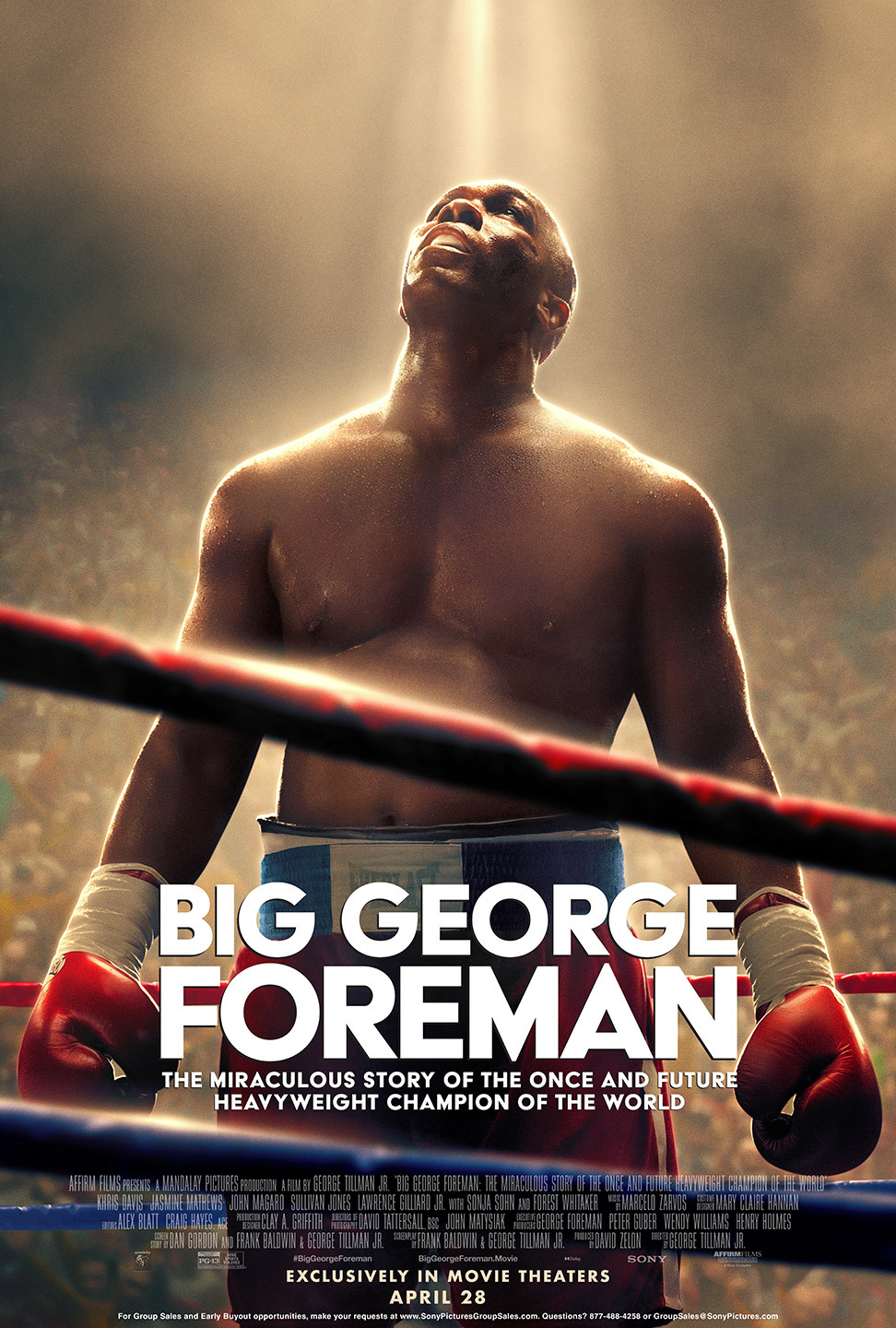
Speaking of the movie Creed 3, we saw a trailer for a new biopic about George Foreman that definitely looks worth watching, just called Big George Foreman. Plenty of real life boxers have seen feature-length movies (as opposed to TV or documentary) of their lives but it's actually pretty surprising how many great boxers have never been portrayed as the main character on the silver screens: Sugar Ray Robinson (though there is talk of one going into production soon), Jack Dempsey, Jack Johnson, Rocky Marciano, Sugar Ray Leonard and plenty of others. Even Joe Louis hasn't had a film made about him in 70 years. Not that Hollywood is just churning out boxer pics left and right but fighters do make for interesting cinematic subjects. Their lives are generally tough, they do a job 99.9999999% of the population in their right minds would be afraid to do (rightly so) and can be a great model for admirable qualities like determination, perseverance and heart, triumphing over adversity.

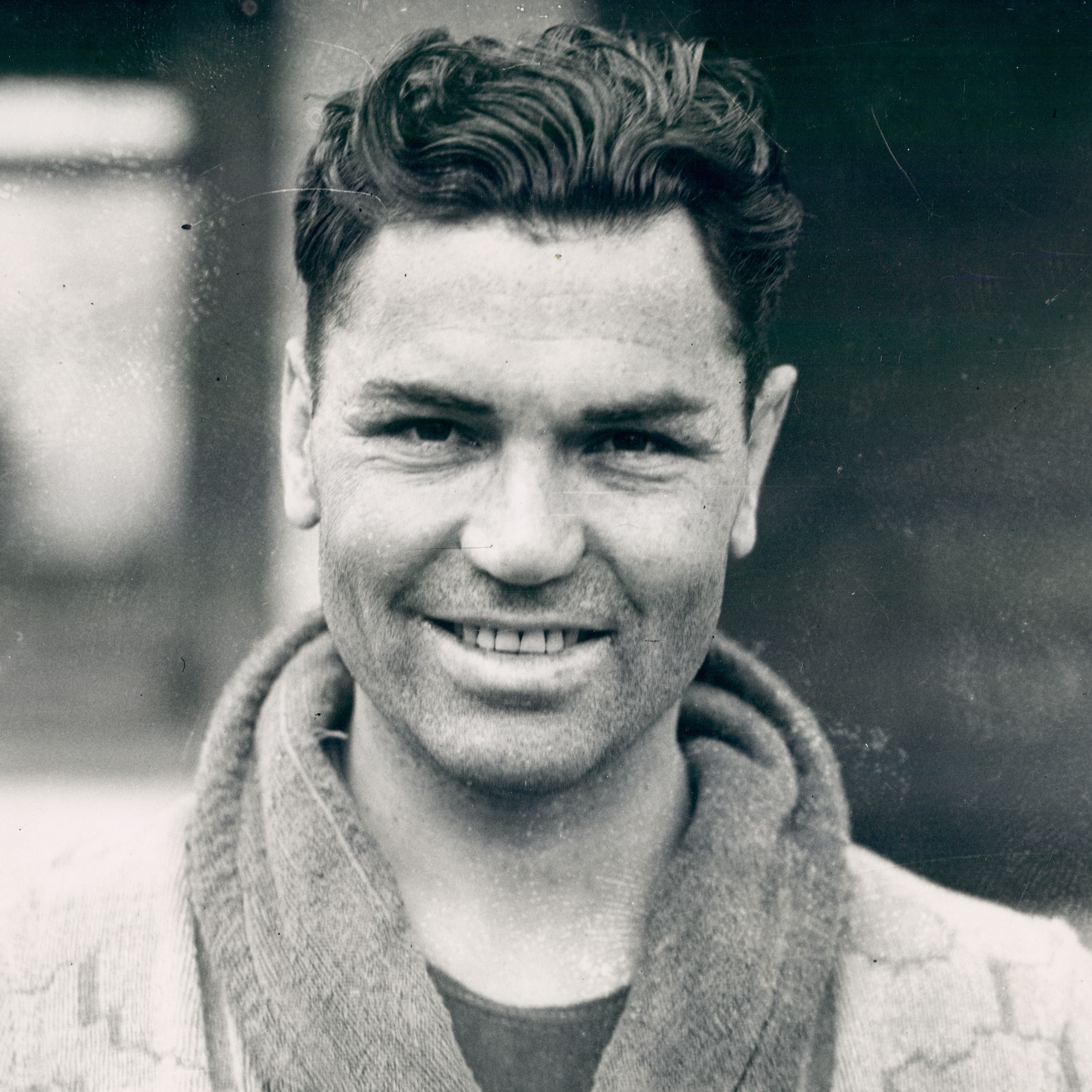
This got me thinking about boxers who I would like to see in the movies. I'd certainly watch any from the abovementioned list but Jack Dempsey might be my top pick just because of how important he was to the sport and our culture at the time. I'm very surprised no one has even attempted this, outside of a made-for-TV movie starring Treat Williams and Sally Kellerman. Dempsey also had that classic, handsome, American icon look so you'd get a lot of high-profile actors wanting to play him and probably wouldn't have trouble filling the seats.

Although the much bigger shock is that there is no high-budget theatrical version of the Jack Johnson story. He broke the color barrier many many years before Jackie Robinson and Marion Motley, faced even more scrutiny marrying multiple white women, and also opened some interracial night clubs (one later became the Cotton Club after Johnson sold it). He faced scrutiny from both blacks and whites at the time, lived a life mired in controversy, had a professional life outside of boxing and even spent time in prison. If a movie studio wants lots of money and at least a few Oscars, this one seems to be pretty much tee'd up. 

Plus, very few people know what Jack Johnson looks like and even less know what he sounded like so we would all go in with no expectations of the man himself. This gets the filmmakers around the problem that I, as a boxing fan, have when they cast actors to play boxers. I could never get past Will Smith in Ali. Not that he did a bad job at all, he did as well as anyone could to encapsulate the Ali persona but it all came through a Will Smith filter. I had the same problem with the Tyson series on Hulu recently. The actor did a fine job but just like Ali, Mike Tyson is such a truly unique character that no one else can really play him but him. I don't have a problem with them not being to pull off the boxing part, it's just that I have such a strong association with these fighters that I can't get immersed into the story when I only see the actor, especially a really well-known one.

So if I'm a studio head, I will definitely greenlight the Jack Johnson biopic. Sugar Ray Leonard is another one of the high-profile boxers I'd like to see up on screen too. I'm a little afraid of the paradigm with Ali and Tyson I mentioned above since I have a strong association with Leonard too but he was played by Usher in the Roberto Duran film (Hands of Stone) and even though he looked nothing like Sugar Ray, I still wasn't put off by it. So maybe I could handle a whole film about his life with an actor playing him. Plus we'd get to see the other 3 kings - Hagler, Hearns and Duran - since their careers were so intertwined. Sugar Ray was a golden boy for sure but he had his share of issues in his personal life and I wondering if that is something he would want to see portrayed in a movie. I hate to say it but the best version of this story might have to come after Ray Leonard has passed on.

Speaking of Golden Boys, I expect an Oscar de la Hoya movie will emerge at some point, but maybe also down the road as Oscar's professional life is still playing out.

One much lower-profile fighter who I think has an interesting life's story is Matthew Saad Muhammed. He was left on the steps of a church as an infant, taken in by nuns, eventually adopted, and turned into one of the more exciting, underrated fighters of the 70s and 80s. His fights were exciting and often involved comebacks, perfect for a movie. He even fought in one of the very early, pre-UFC MMA-type bouts in 1991 against a grappler who submitted him in under a minute. Unfortunately, he was one of those athletes who lost all of his money and declared bankruptcy, eventually becoming homeless on the streets of Philadelphia. So it wouldn't exactly be the happiest of endings but still inspiring to see him go from rags to riches, before eventually going back to rags.

Then there are plenty of current fighters who might one day make for an interesting movie in the future. Tyson Fury, Floyd Mayweather Jr., hell even the Paul brothers' legacy will probably be immortalized on film after their story comes to an end. One thing's for sure that whoever gets a movie, I will be there to watch it. I will watch any movie about a fictitious boxer too. In fact, if I'm being totally honest, the first boxing hero/inspiration was none other than Rocky Balboa himself. Who knows where I would be without him!


Saturday, March 25, 2023

The Double-Cross Guard in Creed 3 - Is That A Thing???

If you've seen the movie, Creed 3, you may notice that the friend/opponent character of Dame Anderson has a somewhat interesting boxing style (at least, after he returns from prison - when they show a younger Anderson fighting before prison, his style is relatively standard). Most notably, he uses something called the double-cross arm guard where he brings both hands across his face at 90-degree angles, creating almost a wall in front of his head. It looks cool and it is one of the rare times where a boxing movie actually was able to accentuate a specific style in a noticeable way.

But is it actually a legitimate defensive maneuver for boxing? The short answer is yes, at least that it used to be, but there are also multiple versions of it that differ from what we saw in the movie. From what I remember, Dame Anderson's double-cross guard was very much parallel with the ground, meaning his arms were up and both elbows were parallel with both shoulders. Archie Moore - heavyweight champ from 1952-1963 with a knockout record that will almost definitely never be broken - popularized a version of this defense but he generally had hips and shoulders tilted so that his arms were on more of a 45-degree axis, which covered not just his head but the right side of his body as well. Ken Norton utilized a version of it as well in the 70s and it was most famously used by George Foreman later in his career, who almost definitely learned it directly from Archie Moore, who was one of his trainers. The Foreman version was probably the most similar to Dame's in the movie as he really made it into a big wall, whereas Moore and Norton combined it more with head movement and footwork.

There were other boxers who used it too but in general, the double-cross guard is relatively rare. The reason is probably somewhat obvious - you are not in a great position to throw punches back when your arms are crossed. Of course the 3 heavyweights I mentioned were incredibly successful but if it were something generally effective, we'd all be using it a lot more than we do now (can't think of anyone who does currently). It should also be noted that the examples I gave were heavyweights, which makes a little more sense. Smaller, faster fighters would have a very hard time pulling it off against other smaller, faster fighters. It just takes too much time to get your hands into position and again, takes time to get your hands back to a good place to punch from. (And then note that in boxing, you are not allowed to strike with the back of your hand or your elbows so you couldn't pull off any kind of a backhanded strike).

The big pro to using this defense is that it gives you extra layers of protection and can cover a pretty big area. Punches can be blocked with the shoulder, elbows or hands. In fact in a non-boxing street self-defense scenario, it is kind of similar to something I teach called "Dracula's Cape", where you completely cover the right side of your face with the right shoulder, the front of your face with the right elbow, and then your left arm is in tight, answer-the-phone guard, adding extra protection to the left side (as most people are right-handed and take big, wild swings with their dominant hand in a street fight).

The Dame Anderson version in the movie though, was so high that it would have been really easy for someone to land a punch to the body. Not only because it was uncovered but you could use your non punching hand to pin his elbows in place for a split second so that he couldn't even try to react and defend low. But Archie Moore and Ken Norton had this solved by tilting their guard to be able to better adjust to blocking body punches.

The Philly Shell defense made famous by Floyd Mayweather involves another version of the cross guard but inside of both hands crossing over each other, only one crosses over to defend the other side of his face or body. This means the other can potentially counter but there is also less protection too. And it comes back to a general problem that if you cross one hand over to the other side of your body, the other side is unprotected and it will take additional, important milliseconds to get it back. Floyd made it work with elite-level reflexes, head movement, and a non-aggressive approach and as I've spoken about many times before, I do not think this a good model for someone who is not yet a good, well-rounded boxer with experience fighting in a more traditional guard. But just like the Dame Anderson double-cross guard in Creed 3, it looks kind of cool so I understand people new to boxing wanting to check it out.

I would say that this is kind of true for everything in a way. In boxing, and in life. Certain fighters will do some pretty cool moves, sometimes breaking the rules and making it work. Sometimes they can be really fun to emulate too. You just want to make sure you have a good, unconscious understanding of the rules and basic technique before incorporating anything that might lead to bad habits or other problems.


Friday, March 17, 2023

Why Do We Do Core?

In our club, we end every boxing session with a relatively brief-but-intense set of core exercises. Every class. There are several reasons why we do this - as somewhat of a cooldown after an even more intense series of boxing rounds, it's a good transition into stretching, we like to torture people, but most importantly, because it makes you a much stronger boxer.

Oftentimes when people think about their core, they think about their front abdominal muscles. The 6-pack. But the core goes all the way around, 360 degrees, like one of those giant, championship belts. I even like to include the gluteal muscle group as part of the core and it is the most important muscle group for boxing. The function of our core is really to connect the lower and upper body together. When throwing punches, most of that power should originate from the lower half and it will be translated to the upper half through one's core. Rotation of the hips and trunk are critical, so without a strong core, any other strength you have will not convert to power. This requires all the muscles in that core belt to be strong.

I've said many times that having gym strength and functional strength can be two very different things. Gym strength - or at least how the majority of gym-goers train - is about lifting balanced loads of weight on single planes of motion at a steady pace. Most work all the different muscle groups with different lifts but those three above-mentioned points remain the same. This does not necessarily create functional strength. It can certainly help, but the strength you need for activities of daily life and sports often does NOT involve balanced loads, on a single plane of motion, at a steady, repeated pace. And those activities almost always involve the core. Picking up groceries and putting them away, moving boxes, shoveling snow, raking leaves, cleaning things, walking a dog, I could go on and on. We don't just isolate a muscle group to do these things. Like boxing, they often involve starting with the lower body and transferring to the upper, with the core being our conduit.

Core strength also helps us with general body control - holding a posture or changing direction, which is something we certainly need in daily life and in any sport. In fact, body control is probably the most important attribute for sports but most underrated because it cannot be easily measured like speed and strength or any of the other criteria we use to rate athletes. Jerry Rice and Michael Jordan are examples of athletes at the top of their respective professions but never because of their measurables. There was certainly a mental part too, especially with Jordan, but I believe it was simply the ability to control their own bodies that set them apart from everybody else. Coordination is key but you need the functional strength to apply it properly.

Along those lines, a stronger core will help prevent injuries as well. While not as sexy as having a chiseled, six-pack, injury prevention is a big deal and something everyone, young or older, should train for. Having poor core strength means less postural control and the more chance things are being moved in a way they shouldn't, as well as repeated, unbalanced stress on joints from those postural imbalances.

When people see boxers doing things like sit-ups and other core work, they often think this is to build the abs up so they can better take punches to the body. This is somewhat true (although strengthening and hardening are not the same thing) but it's not just about taking a punch to the stomach, it is about taking punches in general. Just as a strong core gives you better body control, you can also better move with a punch if you have to, OR maintain better base stability so that you don't get as tossed around/ragdoll'd after getting hit.

So every time you work your core, remember that you are making your punches stronger, making yourself functionally stronger, improving your overall body control, helping to prevent future injuries, and even making yourself better able to take a punch. And like any exercise component, it won't happen unless you MAKE the time for it to happen so that is why we always devote the last part of our workout to this critical piece of the fitness puzzle!


Saturday, March 11, 2023

The Way of the Fist

I just finished watching the Netflix series, Cobra Kai, for the second time. This time with my kids and it made me like the series even more. For those of you who don't know, Cobra Kai is a spin-off of the Karate Kid movies from the 80s, featuring the bad guy in the first film as a now middle-aged man who finds himself by teaching karate to kids. You don't have to have any connection to the original films to enjoy the series but it is nice, as you will appreciate all of the homages and in-jokes they have for fans.

I'm not going to go into the plot too much more but for the point of this post, I will say that the aforementioned bad guy from the 80s movies, Johnny, starts up his own dojo under the name, "Cobra Kai." It was the dojo/system he trained at as a kid. The Cobra Cai motto is "Strike first, strike hard, no mercy" and their general ideology is to be more badass and tough, as opposed to the gentler, more defensive-minded, more traditional karate styles. 

The show isn't really able to differentiate the styles - it's more of just a story conceit - but I am seeing somewhat of a clearer paradigm in real life, when it comes to other boxing gyms/trainers. The vast majority of people who come to our club have never boxed before but there definitely is a subset who come in with previous boxing experience, some even significant experience. What I have noticed and experienced at other boxing gyms (and viewed online) is that during heavy bag workouts, most people do not throw particularly powerful, explosive strikes. There are plenty of exceptions, for sure, and I am not saying this to criticize other gyms or trainers at all. It's just a stylistic thing. We've had amateur boxers come to the club and tap/touch up the bag for 10 rounds, never really exploding with speed or power.

To me, this is somewhat strange, as the heavy bag is the absolute best tool to practice power and there is certainly nothing stopping you from working on your speed as well. I realize I am not the only genius to have figured that out and there are reasons that I often see other boxers go light (light by my standards). In this post, I am going to go through some of those reasons and not rebut them, as they are certainly legitimate and logical, but explain my particular take on them.


#1) Not all punches in boxing are meant to be particularly hard or fast

As a single statement, this is absolutely true. There are set-up punches, throwaway punches, distance-gauging punches, rhythm punches, off-speed punches in an effort to catch your opponent expecting something different, and more. Then of course, you throw fast punches and hard punches. Boxing is all about shifting gears, I like to say. Changing states suddenly, creating rhythms and breaking rhythms. It is one of the things that makes it so exhausting. But you still have to switch gears. What I often see at plenty of gyms and people coming from other gyms is really just one gear. And it's rarely powerful or fast. Can everybody hit really hard or punch really fast? Relative to them, yes! We ALL have gears. Some people's power gear is harder than someone else’s, but you can and absolutely should make that state change. Doesn't matter how old you are or what kind of shape you are in. This is the way you develop speed and power - by practicing it! Again, the heavy bag is the perfect opportunity for this.


#2) If I just slug it out and go for power, my technique will suffer and I really want to focus on that

When hearing people philosophize about boxing (or anything), there is often a very binary approach to their analyses. It is either this OR this, with both options being mutually exclusive. Sure, you could throw wild, looping, haymaker punches with poor technique when going for power but you certainly don't have to. It is very possible to throw heavy, powerful punches with perfect technique. Watch Mike Tyson in the 80s. 

Not only that, proper technique translates to power. When you learn how to throw a lead hook properly, it can end up being the hardest punch you throw, despite being on your non-dominant hand. This is purely because of  technique. Shifting your weight, getting your elbow behind the punch, getting your hips slightly ahead of your hands and then catching up at the end are all technical cues that will make your hook significantly more powerful. This is true for everything. To a lesser degree with speed but still true. Like for instance if you were to drop your hand every time you were about to throw a jab, that jab would not travel as fast as a perfectly straight shot. Same if you were too tense in your arm. Or you let your elbow flare out. Proper technique = Power; proper technique = Speed.


#3) If I just slug it out and go for power, I will be more open for counter-punches

This is a truer version of #2 above. Every time you throw a punch when facing your opponent in striking distance, you are open for a counter. The more you physically commit to that punch, the window of time you are open tends to increase. This cannot be changed. What you can change is the size of your window and there are things you can do to mitigate that risk. Again, watch Mike Tyson in the 80s. He was vicious and explosive but his style was a defensive style and his constant head movement and quickness made him difficult to tag.

Better technique can certainly help here too. If you throw a cross and bring your rear hand shoulder up to your cheek, you are better covered for a potential hook counter. If you keep your non-punching hand up, even better. If you throw long, looping hooks like George Foreman, they are slower and easier to see coming. If you throw shorter, tighter hooks like Joe Frazier, they are much harder to spot and defend.

There are plenty of great boxers who fight cautiously and never really commit or open up. You can certainly be one of those boxers too if that really matches your abilities but at the very least, from a workout perspective, you will get so much more out of trying to box like Mike Tyson (in the 80s) than Floyd Mayweather Jr. post 2001.


#4) If I just slug it out and go for power or throw lighting-fast quick punches, I will gas myself out and not be able to maintain that pace

This is certainly true if you allow it to be true. If you don't push yourself and go beyond your limits, you will never increase those limits. Explosive punching is very tiring, yes, especially if you include the necessary quick head movement and footwork. But would be amazed what you can do to improve your ventilatory threshold and glycolytic energy systems. The problem is that people concede this WAY too easily. Proper technique helps here too but the secret ingredient is pushing yourself/being pushed, getting out of your comfort zone and out of your pace. I have seen multiple people hit a heavy bag for 120 straight three-minute rounds with one-minute rests. That's 8 hours of almost non-stop boxing!!! And that's not just kind of noodling around or touching it up or anything. Going HARD for 120 rounds, throwing combos, using footwork, and doing non-stop rapid-fire burnouts. This would have been impossible for me to even imagine had I not seen it done multiple times. I can't even tell you how it's physically possible but nonetheless, completely possible.

Pushing beyond your limits is very difficult. It is uncomfortable. And most of us don't want to be uncomfortable. Plus, going beyond your limits may make you look bad. You may look tired. Your technique can/will suffer. The way to fix that is to train and push through. Otherwise, you won't get any better.


#5) Going too hard makes me more susceptible to injury

Perfectly logical. Could even be true but how much more susceptible does it make you? Does it HAVE to be that way. If your technique and equipment are good and you don't have any pre-existing issues, I would say the chance of injury on a heavy bag is pretty low. I've seen thousands and thousands of people do it over the years, including myself. There are other things you can do to mitigate injury too, like increase your grip and wrist strength, doing hand exercises before boxing, warming up proper, etc. I feel like the chances of injury punching a heavy bag is not even close to the chances doing exercises that more people do every day - running and lifting weights. Or sports and leisure activities like soccer and skiing. I hate to say it but if anyone is holding back for this reason, they are probably just using it as an excuse to either not work hard or learn the proper way to do it.


The general, overall mistake in a lot of the thinking here is believing that explosive speed and power, shifting into those gears, has to come at the expense of something else. It doesn't. You can truly have your cake and eat it too, you just have to put in the work and believe in yourself. 

So I guess to come full circle, I feel like our club has kind of a more Cobra Kai approach, but just without the evil. I believe that if you are learning how to box, you should learn how to throw punches with explosive power and speed, designed to hurt an opponent, to finish the fight. Not because I am a jerk and want anyone hurting anyone but because that is what professional boxing is all about, no matter how much purists want to argue otherwise. And, for the umpteenth time, throwing explosive punches with power and speed will get you a better workout than just staying in a low gear the entire time. I want to teach people how to box properly but more than that, I want to help them to get better. Better at the skill, in better shape, stronger, faster, more confident, more empowered, happier, and just feeling better in general. I believe that this is accomplished by striking fast, striking hard, and showing YOURSELF no mercy!


Saturday, March 4, 2023

Learning Boxing in a Group Environment

Like anything else, there are many different ways to learn how to box. You can train 1-on-1 with a coach, you can do smaller group training with a coach/coaches, you can train on your own off of videos/books/etc., you can just lace up the gloves with a buddy and duke it out on your own based on your own respective knowledge of the sport. There are also plenty of different iterations and combinations as well. 

Obviously, some ways are far more effective than others. Maybe even infinitely more effective than those last two options I mentioned. Training 1-on-1 with a coach is usually the fastest way to learn boxing skills, provided of course that the coach is good. It can also be the best scenario for fitness training but not always. Depends a lot on the coach, the student and the program. 

I have seen hundreds of people learn in a group environment too. Certainly not as fast as 1-on-1 but still pretty darn fast, if the minds are willing. And there are many different ways group training can go down. I've learned systems where a group of brand new people all start at the exact same time, like a flight of classes where we develop together. I've done classes with different levels like Beginner, Intermediate, Advanced, etc. I've also done classes with all different experience and ability levels. 

For certain martial arts, the first two examples (which group people by experience) make a little more sense. There are cons to this approach too, especially in terms of availability but most martial arts have a LOT of different, specific techniques that are sometimes stacked on top of each other so it doesn't make sense to learn something like how to defend a certain weapon if you haven't done the unarmed defenses first.

Boxing is a little bit different though. It does not necessarily involve a ton of small, separate techniques. There are the basic punches with some variance, there are combinations, there is footwork, there is defense, there is clinch work/hand control, there is strategy, there is feinting, there are some different styles, but that is mainly it. That doesn't mean you can learn it all super easily- there is literally infinite nuance in each of those categories, but compared to another martial art like say, Tae Kwon Do, just their list of all the different kicks could fill a page. 

I have seen people learn boxing efficiently and effectively in an all-levels heavy bag class environment. Sometimes there are more advanced techniques that might be a little much for a brand new person to take in, but exposing them to it is certainly not a detriment, and while they may not be able to execute the technique flawlessly, they can still throw punches, take steps, etc. Whereas if you were taking judo, for example, and you attempted to pull off a shoulder throw your first day, you likely wouldn't be able to get it started (shoulder throws are MUCH harder than they look!). 

Then on the flip side, there is no boxer who is just too damn good to be throwing jabs, crosses, hooks, etc. and working basic defenses on the heavy bag with other folks of different levels. No one. And anyone who thinks that way is very undereducated and probably a little scared too. Sure, there are different things to train in boxing you would want to do if you are competing/training to compete but the basic stuff never changes, and you are never good enough. It's not like when you get to a certain level, you are able to learn this special, secret uppercut that we can't teach to the newbies. Instead you just make your basic uppercuts better and once again, there is always more stuff to improve. In fact, the more you learn and practice, the more you realize there is to learn. You learn these things by being taught but also practicing over and over and over and over again.

One thing I have seen is that many people have it in their minds that they can't really learn in a fast-paced, cardio-intensive group environment where they are thrown into the mix. It makes sense too. There are plenty of things you almost definitely can't learn like that. Sewing, for one. Or again, even certain traditional martial arts. Or something like weightlifting, where the potential for injury is much higher. But boxing, at least non-competitive boxing, is different. I know because I have seen it happen with all different types of people. Some in shape, some not. Some athletic, some not. Some relatively young, some not.

The only obstacle, most of the time, is their mindset. People convince themselves that they can't do it, or that it's too hard, or that the environment is not conducive to learning. I've tried on several occasions to create a Beginner type of boxing class and have noticed that nothing really changes for brand new boxers. Those who struggle will struggle in a simpler class too, they just won't learn as quickly. 

Changing your mindset isn't always easy though, and it can be very hard to feel uncoordinated and like you don't know what you're doing. The more you accept those things and understand that it is all part of the learning process, the better things will go. Ever watch a baby try to stand up and take their first steps? It ain't pretty. They stumble and fall and stumble and fall until one day, they can stand up and take a few steps. Those aren't very graceful either but it builds a foundation that can eventually take them anywhere they want to go. But the baby has no problem with trying and falling down. Or stumbling and looking silly. 

So whether you are learning how to box- or just about anything- I think that last point is pretty key right there. Be okay with getting it wrong, maybe feeling like you look a little silly as you try to put these awkward, foreign movements together. Yes, it might be tougher to do in a group setting but if you can be comfortable being uncomfortable for a while, you're going to learn it quickly!


Saturday, February 25, 2023

How Do You Box?

One of our old trainers who used to teach classes at the club would often finish the warm-up
with everyone, then come over to the front desk and ask me quietly, "How do you box?" It was of course a joke, as he was seconds away from teaching a boxing class and thus, I would often chuckle. At first. But he did it a lot and it became less funny over time. But he stuck with it and then, after a while, it became funny again because he just kept doing it.

Anyway, another part of the joke is that one can't just sum up how to box in just a few words. It's an extremely open-ended question. You could spend a lifetime learning it and still continue to learn new things about it. Anytime someone thinks they've got it all down, they look deeper and realize just how much more there really is. One of many great things about the sport, really.

That being said, when teaching boxing or even being taught yourself, having quick, simple, technical cues are so important. Just short sentences to put in your brain and remember while boxing. Learning proper boxing technique is hard enough but maintaining that technique while tired is a whole other challenge. Here are some general, non-punch-specific cues I like to use when doing a boxing workout on the heavy bag or with someone on mitts. It is certainly not a complete list and is not necessarily in a specific order but all important, basic things to always remind yourself of, no matter how good you at get. Intermittently throughout your workout session, perform a "systems check"  and run through these! 

  • Remain in your fighting stance at all times - non-dominant foot forward, dominant foot back.
  • Keep your hands up but shoulders relaxed.
  • Hands start from the face and return to the face as quickly and directly as possible on every punch.
  • Stay on the balls of your feet.
  • Keep a slight bend in those knees at all times, let your weight sit down low in the hips.
  • You want some distance between your feet. Not so wide that you can’t move but never too close together.
  • Chin tucked into your chest, with a slight pelvic tip forward.
  • Give a short, forced exhale on each punch. Don't hold your breath!
  • Combination punches generally flow together, with no pauses naturally in between, i.e. if you throw a jab-cross, rotate your cross hand shoulder forward as your pulling your jab hand back.
  • Try to keep your head moving - at least a little bit - before and after combos.
  • Relax those shoulders. Seems counterintuitive to throwing powerful punches but you will punch faster and harder with relaxed shoulders, at least up until the point of impact.
  • Straight wrists, tight fists when you hit that target.
  • Relax the fist when not punching.
  • Hit with the front and middle knuckles on your hand.
  • Shoulders replace the hands when throwing any punch to the head.
  • Bring those hands back to the chin just as fast as you throw them out there for a punch. Imagine you are taking a cookie from a cobra's mouth and don't want to get bitten!
  • Don't push your punches, snap them!
  • Rotate shoulders and hips on every punch.
  • Start punches from the ground up - begins in the feet, works through the leg, the hips, the shoulders and THEN the hand.
  • Check your distance from the target  and use footwork to get into the proper position.
  • If you get tired, still stay active. You don’t have to throw the combo again but keep your hands up and keep moving. Your opponent doesn’t have to know if you are tired!
  • Start slow to learn a combo, then speed it up, then add some power.
  • Don’t lean your torso in to punches. Head should never be over feet. If you find yourself needing to lean in, get closer and/or rotate more.
  • Every time you throw a punch, you are shifting weight from one foot to another. About 60%, give or take. Again though, that does not mean your torso/head should be leaning out.
  • Always keep your eyes facing the target. You can rotate everything else but keep your head looking straight.
  • Non-punching hand should always be covering the face
  • Imagine your opponent is as tall as you. Don’t punch upwards as if fighting a very tall person or downwards either. For body shots, it is your body/ribs/belly/liver/spleen you should be targeting, in terms of height.
  • Drop the weight down a little bit on power punches or at least, don’t stand up taller to punch the bag. Want maximum balance.
  • All punches should hurt or at least bother your opponent. If your punches don't hurt, you must exert!
  • Don't just stand in front of something and punch. Land your combo, then move to a new spot/angle, before throwing again.
  • When punching while stepping, your foot should land at the same time as the punch. Sync up the hands and feet.


Whether you are shadow-boxing, hitting a heavy bag, working mitts, sparring, or even in the ring fighting someone, don't forget to perform these system checks routinely. Doesn't mean you can run through everything all at once but taking a moment to move out of striking range and check in with what your hands, feet and head are doing, will make a HUGE difference. As we get tired and in the heat of battle, it is very easy to lose track of these things, even for experienced boxers.

So, though our old trainer was joking when he asked, "How do I box?" it is a question we always have to ask and re-ask ourselves all the time. And just like non-sweet sciences, nothing is ever quite 100% settled either. There are certainly standards like the many I have mentioned but it is always good to re-evaluate them and see if they still and always hold true.


Friday, February 17, 2023

Great Fights You Should Watch on YouTube!

This week in our club, we honored a very classic fight known as the St. Valentine's Day Massacre. Sugar Ray Robinson, considered by many to be the pound-for-pound best ever fought Jake Lamotta in 1951. It was indeed a massacre but also a movie-like display of toughness and resiliency. For me though, what makes a truly great fight is something that goes back and forth between two motivated combatants who display excellent skill and strategy. The St. Valentine's Day Massacre was an iconic fight for sure but not necessarily a great one, in my opinion.

Iconic means that the fight was important to boxing, with a huge buildup, memorable and significant in some way beyond the contest itself. Joe Louis vs Max Schmeling II was one of the biggest fights of all time, taking place during the rise of Nazi Germany in 1938 and meant a whole lot more than just a heavyweight championship to the entire world. But the fight was over in the first round, with Louis knocking out Schmeling. Not necessarily an exciting contest. Maybe the most well-known, famous fight of all tie was the Rumble in the Jungle - Muhammad Ali vs. George Foreman. The story behind this fight and the two men, as well as what took place in the ring that night, is truly the stuff of legend but to watch the actual fight itself is not particularly exciting to me. While Foreman was one of the greatest and Ali is known as THE greatest, neither displayed great boxing skill in that fight. Ali used a very ill-advised strategy and Big George let him get a way with it by throwing looping, sloppier punches. Maybe that's a little blasphemous but if you are looking to check out some of what I feel are more interesting, exciting and compelling battles, here are some recommendations below.

I've divided them up into "classic" and "modern" categories. “Classic” being anything past 20 years old and “modern” being something more recent, with boxers who still compete. I've included video links too. You can skip ahead to the first round if you don't want to see the walk-in and everything else. And now that football season is over, what if you took about an hour every Sunday to watch a boxing match instead?

Classics

Muhammad Ali vs. Joe Frazier I

Called the Fight of the Century, Ali-Frazier 1 had a great build-up between the two prominent heavyweights in the golden era for that division, with both fighters generally seeming to dislike each other, Their third fight between them - The Thrilla in Manilla - is an honorable mention and almost like a real life Rocky movie but both men were at a higher level when they met the first time. Plus, for those of you who doubt the importance and power of the lead hook, look no further than this fight and watch Joe Frazier use it to single-handedly (literally) take down The Greatest.


Sugar Ray Leonard vs. Tommy Hearns I

Another two all-time greats going at it in a battle that went back in forth, with adjustments and strategy changes. I consider myself very lucky to have grown up during the best era for middleweights ever, who all fought each other. Any of the classic battles between Sugar Ray, Hearns, Hagler or Duran and fun watches but this one is the second best.


Marvin Hagler vs. Tommy Hearns

And here is the best of those matchups! If you watch nothing else I mention here, watch this fight. It's only a few rounds, it won't take long,  but has more action than you will see in multiple 12-round fights. It's one thing to watch an all-out brawl but watching it with two of the best ever is something special. Even if you don't like boxing or appreciate the skills, you would probably enjoy this one.


Riddick Bowe vs Evander Holyfield I

When Mike Tyson lost to Buster Douglas just over 33 years ago to the day, I mostly stopped following boxing for a while. I also ran away from home, didn't have a TV, and there was no such thing as the internet so it was fully off my radar. Another one of my favorite boxers, Hector Camacho fought against Julio Cesar Chavez a couple years later and I watched it with some people from work and Camacho lost a decision and was generally dominated and it just made me angry so I'm like, "Screw this!" and didn't want to watch boxing at all. But then a couple months later, I was housesitting for someone with HBO and watched the Bowe-Holyfield fight just to kill some time. It actually got me re-interested in sport. Great fight, great heavyweights and it ushered in a decent mini-era for that division. All three fights these guys had were good but the first was definitely the best, in my opinion.


Mickey Ward vs. Arturo Gatti I

All three of the Ward-Gatti fights were classics but this is easily my favorite. Both guys fight similarly in a style I really like. Great boxing, went back and forth, and so much heart from both fighters.


(Honorable Mention) Diego Corrales vs. Jose Luis Castillo

Another all-out slugfest with the fighters trading shots for 9 rounds but it was the 10th round where it became a classic. I thought it was over two times (and might have been stopped earlier, had it taken place today).


Modern

Juan Manuel Marquez vs Manny Pacquiao IV

We had all been begging for the Pac Man vs. Mayweather fight for years and even though I had resigned myself to believing that it was never going to happen, I can't say I was super excited to see Pacquiao fight Marquez for the fourth time. All their fights had been close (first was a draw) but I thought it would be another hard-fought, relatively close decision for Manny. This battle took a few rounds to heat up but once it did, we saw some excellent hand speed and probably the best counter-punch knockout of all time.


Anthony Joshua vs Wladimir Klitschkoho

The heavyweight division reached it's lowest point at the end of the 1990s, at least in terms of captivating the public's interest. It was largely dominated by the Klitschko brothers, Vitali and Wladimir. Both very talented and seemingly good guys but just did not move the needle. Without a lot of strong competitors, the landscape was pretty barren. It took about 15 years for the division to get more interesting. Anthony Joshua put on a pretty good performance against Wladimer in 2017 and threw one of the best uppercuts you'll see in the 11th round, coming back from some major damage and exhaustion earlier. I won't say watching all 11 rounds is that exciting. There are a lot of less interesting moments for sure but the highlights are at least worth checking out.


Tyson Fury vs. Deontay Wilder III

This was another fight I didn't necessarily want to see. And again, Fury-Wilder 1 and 2 weren't bad fights, it was just that Tyson Fury is a much more skilled boxer than Wilder and of all the combined rounds they had fought in their previous two fights, I thought Fury won pretty much all but one of them and like most people, wanted to see Fury and Anthony Joshua go at it instead but a third match with Wilder was contractually obligated. Luckily though, their third fight wasn't what I expected at all and was one of the most exciting battles I had seen in a while. Lots of action, both fighters looked finished at multiple times, and were going for broke. Tyson Fury could have easily out-boxed Deontay again but decided to slug it out.


Jermell Charlo vs. Tony Harrison II

Great technical boxing from both fighters. I really like Tony Harrison's sharp jab and after I saw this fight, I decided I wanted to jab like him. Then I decided I wanted more of a Macho Camacho hammer-style jab. One day I hope to somehow fuse the two despite them having different applications.


Naoya Inoue vs. Nonito Donaire I

Nonito "The Filipino Flash" is/was a future Hall-of-Famer who had experienced a resurgence in the last few years. Inoue was a hungry, young fighter who had just been running right through everybody, finishing all of his fights early. As impressive as it is to just destroy the competition, it's even more impressive when you aren't able to just crush someone the way you're used to, end up getting hurt, taken into deeper waters for the first time, and manage to come back by taking things to the next level and showing the heart of the champion. Doing this on a couple of different occasions is even more impressive still.


Saturday, February 11, 2023

Do You Have a Chip on Your Shoulder?

Once again, I am gonna reference the Big Game coming up this Sunday, Super Bowl LVII, Kansas City Chiefs vs. Philadelphia Eagles. In modern day American football, the success or failure of a team is largely dependent on how well their quarterback plays. It is by far, by far, the most important position of any sport ever. Doesn't mean the other players don't matter- it takes a village- but without good, consistent quarterback play, your team does not have a shot.

The Chiefs are led by quarterback Patrick Mahomes. I think it is pretty safe to say that he is the best QB in the league right now and if he wins on Sunday, it will pretty much cement that legacy. But when he came out of college, there were plenty of legitimate questions as to whether or not he could actually play in the pros. He played for Texas Tech University, a member of a Power 5 conference but by no means a college football powerhouse. As a starter, his win-loss record was 13-19, with his best season coming his last year where they went 7-5. That is barely bowl-eligible. Everyone knew he had phenomenal physical talent but he also played in a very college-style system. Record-setting quarterbacks coming out of Texas Tech the last 20 years are not that uncommon but to date, none of them have had any significant career in the NFL. So there were doubters when he came out of college. The Chiefs picked him in the first round of the draft but nobody was picking him to be an instant star.

The Eagles QB is Jalen Hurts. He started off in a much more prominent college football team, Alabama. But he didn't showcase a lot of arm talent there and despite the team's successes, he lost his starting job to a true freshman and transferred to another school, Oklahoma, where he put up better numbers but it was again, in a very collegiate system that hasn't transferred well to the pros. He also lacked some of the physical traits that NFL teams look for in their quarterback. He's not particularly tall and while athletic, did not show anywhere near the kind of arm talent that someone like Patrick Mahomes had. It was a big surprise to most when the Eagles picked him in the 2nd round and most of the experts did not think he had a solid chance to be a good pro.

Then of course there is Tom Brady. Not playing in this Super Bowl but has played in more and won more than anybody else. The undisputed greatest of all time. His story was much more unlikely. Drafted in the 6th round with no expectations to be even be a backup. Our home team QB, Josh Allen, displayed some amazing arm talent in college but was a California kid and not a single team in his state (of which there are many) wanted him. He had to go to Wyoming, our least populous state with pretty much zero presence in the college football universe. In the pros, his favorite target has become wide receiver Stefan Diggs, who was drafted unnoticed in the 5th round and never expected to be a starter on any team. 

I could go on and on here. You take a look at the All-Pro list in the NFL and just about every player on it was doubted in some way. That is where I am going with this. The greatest football players, by and large, came in with a chip on their shoulders. They wanted to prove their doubters wrong. Instead of being dissuaded or losing faith, they persevered and became greater than anyone could have imagined. All the people who doubted Tom Brady were not wrong. He overcame those doubts with hard work and belief and sheer will.

While 99.999999% of us have no shot in the NFL, these are good lessons to apply to our daily lives. We face, and will continue to face, adversity, struggle, and people have doubted us too on some levels. The key is to turn that all into our own personal successes, no matter how small. Let all of those doubts, all of that adversity fuel us to work harder, to do better, to overcome anything.

We should also let those stories inspire us. I've seen this work firsthand in a boxing class. I've come to a class before and just for whatever reason, didn't have it. Something was off. I wasn't moving well, punching well and getting too tired. What's worse is that I knew it and the very thoughts themselves were taking me into a downward spiral. Then I remembered watching Michael Jordan (who didn't make his varsity high school basketball team) and remembered some regular season games when he was off. None of his shots were going down, he wasn't able to drive the ball to the basket, whatever; and I remembered what he did. He grinded it out. Took it to the hoop, got fouled, and made free throw shots. He found a way to get it done even when he was off. Obviously, I am no Michael Jordan but in my little instance of feeling off during a boxing class, I could apply the same thing. Just grind through it. Find something to work on. And it worked! 

So if you watch the big game tomorrow, know that almost all the players and coaches all got there because somebody doubted them. Someone thought they couldn't do it. But they worked hard and did! We can all this too. We've also been doubted. We've doubted ourselves. Whether we're going to a boxing class or playing in the Super Bowl, this is our chance to show what we're made of. To prove the doubters wrong. To persevere even when we're tired, not feeling it, whatever. Take some of those chips you might be eating as a snack during the game and put them on your shoulder!

Friday, February 3, 2023

What Is Wrong With Professional Boxing?

In about a week, the two best teams in football this year - the Kansas City Chiefs and Philadelphia
Eagles - will go at it in the Super Bowl. It is the ultimate spectacle and will be watched by many millions, all over the world- many of them not even football fans. It has become pretty much a national holiday here. And of course, just about every sport has a similar playoff and championship structure.

Boxing is an exception though. There are championship belts, 4 of them, and fighters at each weight class do compete for them but the system is nothing like we see in other sports and that is one reason that professional boxing will never be as popular with mainstream audiences the way football or just about any other major sport is here in the USA. Here are several more reasons:


Fighting is a Hard Life

Though I am highly critical of the way professional boxing is managed, there are some issues that stand in the way of its popularity that cannot be fixed or changed. While football teams can play about every week, basketball about every other day, soccer same thing, baseball even every day, boxers need a lot more time in between, particularly at the higher level where they fight more rounds. It's just not safe to put your body through the process on a regular basis. The same could be said about football but players at least get an offseason and are not involved in every single play. So the problem here, is that it doesn't allow fans to get immersed into a season and follow a player/team. Some boxers will fight a few times a year, some maybe only once.

I guess there is a way to change this but it would really change the types of fights we saw. Going to an Olympic style with 3-round bouts, accentuating the point system, and having boxers compete every week for a set period of time. The problem is that 3-round fights are pretty short and not something I could see the public tuning in for a must-see type of event.

Before a boxer can get to any kind of high level, there is a very long, hard journey ahead. Many of the greats started off when they were little kids, trained for a long time, had a successful amateur career for no money, then a pro career for not much more money until they started to develop a name for themselves. Some prospects, particularly those who are Olympic champions, can command a higher salary from the get-go but even then, it's not going to be like getting your first contract in many other pro sports. And going the Olympic route isn't easy at all. So if you're a fantastic athlete, you are probably going to lean towards other sports with a lower floor, higher ceiling, and don't involve getting punched hard by someone trained to do so.


Fights are Made (Or Not Made)

This is probably the biggest issue right here. In other sports, a governing body sets the schedule. For playoffs and tournaments, competitors are matched up together culminating in a championship. Boxing has several governing bodies, to some degree, but they cannot really set up high-level fights. This gets decided between the promotors and fighters themselves. They have to agree to terms. This negotiation process becomes a lot more difficult where one boxer needs a fight a lot more than the other. One fight everybody has been waiting for for years is Errol Spence and Terence Crawford. Both are champions, the potential match-up has been discussed and even promoted but terms have never been agreed to. It is also possible they may not want to fight each other. Why take the chance of getting a loss when you can continue to stay undefeated and still make money? Plus what if one side wants more money in general? Then the other side is going to want more too. How does that get resolved? Sometimes fighters will even have to give up some of their purse to get the fight but that's only if they really, really need it and the best fighters rarely do. Even the venue itself is part of the negotiation process and just another potential complication.

Along those lines, fights are often teased, even announced, but never happen. Or in the case of Mayweather and Pacquiao, happen years down the road and are less eventful than they would have been when everyone was screaming for it. If I read one more thing about Gervonta Davis and Ryan Garcia that doesn't include a confirmed date, time and place, I am going to smash my phone. And to add insult to injury, when the whole world has wanted to see something like Errol Spence and Terence Crawford fight, talks and dates get thrown around, both sides jaw at each other, the matchup is teased some more and then we find out Crawford is going to fight someone else we don't care about. Spence and Thurman just got announced. 

This is extremely frustrating to any hardcore fan and will not bring in new fans at all. Imagine if we got to listen to the Chiefs and Eagles talk about each other all season, win all of their games leading up to the Super Bowl, and then it just never gets played?  Or hey guys, instead of the Chiefs and Eagles, we were going to have Indianapolis Colts play the Eagles instead? Is that cool? I know it's the not game you wanted but Indy is really fired up for it! And who knows, could be a good game, right? This scenario cannot ever be successful. Boxing used to be a lot more popular than it is now and one of the reasons is that superstars fought each other. There still had to be terms agreed to but it was a lot easier to get done.

Of course some of the governing bodies try to take some control of this but there is only so much they can do. If someone wins their belt, they can contractually require them to defend that belt within X-amount of time, against the highest-ranking challenger. But fighters and their teams can get out of this too. Payoffs or just vacating their belts are an option. Which kind of rolls into our next issue.


So Many Weight Classes, So Many Belts

Quick, who won the Super Bowl last year? The LA Rams. Who won the NBA championship? Golden State Warriors. Who was the best boxer? No one can answer that question easily because as I mentioned before, there are 4 major governing bodies (think of them like leagues) and 17 weight classes. That means there could be 68 champions at any given time. 68!!! Now it is certainly true that many champs have multiple belts in their weight class, sometimes even belts in different weight classes, so there are not currently 68 champs but it is certainly possible. There is this notion of a "pound-for-pound" list and rankings every year, including a Ring Magazine champion but it is not anywhere near as cut and dry. It's all just based on opinion and can never be decided in the ring.

The weight classes are another one of those things that can't/shouldn't really be changed completely because it makes such a huge difference and fighter safety is highly dependent on it but we probably don't need 17. The UFC, by contrast, has far less and it's a little easier to keep track of who the champions are. And unlike boxing, the UFC is one league that controls their matchups pretty completely. There are other leagues, like Bellator and One and smaller ones but the UFC is really the main one, where the most talent consistently lives.

Generally with boxing, they say that if the heavyweight division is relevant, boxing is relevant. The casual fan is not going to be as interested in the smaller weight classes. This has proven out to be true, looking back over the years when the sport spiked in popularity. It is something that has been lacking for a while too, which doesn't help.


Pay-per-View

Some of the networks, mainly ESPN and Showtime now,  as well as streaming services like ESPN+ and DAZN will show fights on TV but the vast majority of big fights must be ordered separately through pay-per-view. It's gotten pretty expensive too. There is a niche audience of hardcore fans who will pay for it consistently but casual fans will not, save for those rare events that trickle into pop culture. Every boxing promotion is well aware of this and has no real motivation to change. That niche audience is just big enough to make it worthwhile and just passionate enough to pay a big price so it isn't worth taking the financial risk of putting everything on TV like the other major sports. And it becomes one of those chicken-and-the-egg things. The NFL can put their fights on for "free" but make tons of money because advertisers are going to pay through the roof for commercials, since the sport is so popular. They won't pay that money to air their ads during boxing because it doesn't command that big of an audience. But it never will because of the pay-per-view wall. Boxing promotions would have to lose money with the hope of making more money down the road and it just isn't worth it to them.


Promotion In General

For similar reasons, fights and fighters are not promoted the way they used to be. Sugar Ray Leonard would be in commercials, the cover of magazines, on the Johnny Carson show, etc. Mike Tyson had his own video game (and it was awesome). Even networks would have their boxing events during the weekends, during the day, and they would promote them. While watching football on CBS, I'd see a commercial for their boxing event next week with Hector "Macho" Camacho. I had no idea who this dude was but he sounded like a guy I would want to watch fight another guy. Ray "Boom Boom" Mancini too. I was intrigued so I watched and ended up loving them both. Now of course those were great fighters and a better time for boxing but if I were a kid and saw a commercial for a similar afternoon program with Naoya, "The Monster" Innoue, I would be totally interested in checking out this Monster. But we don't have regular boxing on TV like that anymore. Even if it's just re-runs from recent fights, people might tune in and get more interested in the product if we went back to this. Just about every televised boxing broadcast starts late at night (with some exceptions due to time differences) and the main event doesn't even go on until after midnight EST. If the rest of the card is not interesting, plenty of casual watchers will have lost interest and/or fallen asleep by then.

Boxing is not really advertised in general anymore either, except through social media. And the ads aren't very compelling or interesting to the uninitiated. All the chatter about boxing is restricted to people already within the social bubble of the sport and if you are outside of that bubble or don't follow certain things on Instagram, it is likely you won't be exposed to it. Even fight posters aren't as common as they used to be. The very first big fight I remember being promoted was Larry Holmes vs. Jerry Cooney. I was about 7 years old and wasn't exactly tied into pop culture but I still couldn't escape it. I saw billboards, posters, heard about it on the radio and even heard people talking about it. That could never happen now. I knew nothing about boxing at the time but I knew when that fight was going on and that it was a big deal. Nowadays, even when I follow boxing closely, I still have Google fights to see what's happening this month. I suppose it could be that chicken-or-the-egg thing again where boxing isn't promoted the same way because public interest isn't there but we have seen the interesting example of Jake and Logan Paul recently, who were able to make a name for themselves outside of boxing circles and generate more interest for their fights than experienced fighters,

Speaking of those Paul brothers, I do want to say they will NOT appear on this list as what is wrong with professional boxing. Quite the opposite really. As I said in the paragraph above, they have been able to accomplish what boxing either can't accomplish or won't try to accomplish. They have crossed over into the mainstream. They have angered a lot of those hardcore boxing fans for sure by doing this but instead of hating, I think there is much to be learned from how they have handled their career.


Commentary

This may seem like a small thing but it's bigger than it seems. American football is a very complex game to learn. It should be a major roadblock for the average layperson but many of them are able to learn and fans in general have become very educated on the game. Much of this comes from the commentary you hear during football telecasts. People like John Madden taught us the game as we watched. Through the help of producers, people like Cris Collinsworth and Tony Romo are able to explain everything that is happening, as well as the nuances behind them. Whether you have seen a million football games or are watching your first, all of the announcers and production crew are going to bring you into the game.

No matter what you think about Joe Rogan personally, I think it could be argued that he is the best sports color commentator ever for his work with the UFC. While not as complex as football, mixed martial arts was something brand new back when he started. None of us necessarily grew up doing it or certainly were watching it on TV. It didn't exist. Sure we had martial arts and boxing and wrestling but the merging and fast evolution of MMA is something totally different. It could not and would not be where it was if not for Joe Rogan. Once again, he taught us the sport and brought us into it. Besides his knowledge, it was his passion for MMA and passion for talking about MMA that made us want to care too. Then of course there are a plethora of famous voices in baseball and basketball too.

Boxing has never had anyone like this, in my opinion. At least, not in my lifetime, with the exception of Teddy Atlas (who should still be doing it). Many of the commentators are smart, experienced, and certainly nice enough but they seem to have a little to no interest in teaching me the sport. Again, it feels like they understand that they have their niche fans who tune in and talk only to them, with no desire to try and bring in a newbie. Not a ton of passion there either. So someone checking out a fight for the first time won't have very much explained to them nor to the commentators themselves seem particularly excited.

One thing that would certainly help is for the judges scorecards to be made public at the end of every round. Even a boxing superfan may have trouble figuring out who won each round and while judges can and certainly do get it wrong, at least we would know where things stand. Then the commentators would talk about why that person might have won the round, explaining the scoring system so the new and casual fans will at least know who is technically winning. Boxing also is a very fast-moving sport and it is critical that what's going on is clearly called out to us.

Then finally, boxing productions and broadcasts are often poorly put together. Even at a high level. There is often too much time between fights and nothing going on for far too long. I understand that the sport itself provides some limitations here. A fight could last 5 seconds or about 50 minutes. This makes scheduling and preparation difficult and no one wants to do anything to mess with the main event but the UFC does a much better job of managing all this. The problem gets exacerbated in boxing because of the issue with quality commentating. Besides the team talking about the action in the ring, there is the initial front desk group too (don't know what they are actually called) and again, they don't do a lot to really bring me in. So a fight will happen, the ring team will talk for a while, we'll cut out to the front desk people, they will talk a little, we'll see a video montage of the main event fighter, each one looking almost exactly the same, and then rinse and repeat. I love boxing. A lot. But I get really bored during the downtime.


What Can Be Done About This?

I've talked about a few things already - fewer belts, regularly scheduled non-PPV broadcasts, more promotion, much better presentation, some way to force fights to happen - but none of them will likely occur because as I also talked about before, Honey Badger (professional boxing) don't care. They seemingly have no interest, or no longer have any interest in bringing in the casual fan that makes other sports incredibly popular and socially relevant. If you train in boxing on any level, I highly recommend watching fights whenever you can. It is always a fun experience to watch a sport you used to not understand but now have some firsthand knowledge of. Plus it will make the sport more interesting in general. I can't support paying top dollar for it though. One thing that is kind of nice in the modern era is that you watch older, even recently older, fights all the time on YouTube. Despite all my old man crankiness, I love that I can just put on any classic fight I want whenever I want. Once again though, this is not an entry point for new fans. You have to actively seek it out instead of just being exposed to it. And I guess that kind of sums up my whole diatribe right there!


Self-Defense Training & the "False Sense of Security"

When you train in a combat sport like boxing, kickboxing, Muay Thai, MMA, etc. - or more traditional martial arts like karate, jiu-jitsu, ju...