Friday, May 6, 2022

6 Biggest Myths About Boxing Training

I've said it plenty of times before but I have been lucky enough to meet literally thousands of people brand new to boxing and interested in checking it out. And have probably met hundreds more since I last wrote it. It's always interesting to hear about everyone's expectations going into their first boxing experience. Based on these chats and just what I've read and heard from others, it is safe to say that there are quite a few big myths associated with boxing training. Many of these seem perfectly logical and rational but are not necessarily true at all. Here are my Top 6:


#1) Boxing is an Upper Body Workout Only (Whereas Kickboxing Works the Lower Body)

We definitely hear this a lot and again, it makes sense if you aren't familiar with the sport or experience since you imagine punching as something you do with your hands, arms and chest. By contrast, it would seem logical that since you throw kicks with your legs, kickboxing is all about the lower body while boxing is upper body.

The truth about boxing is that you actually don't throw punches with your hands, chest, upper body, etc. Punches start with the hips and legs. And I think it's fair to say that on certain punches, like hooks, the mast majority of your power comes from the lower body. The lower body is just naturally stronger and the source of most, athletic explosive movements. Now of course we hit someone with our fist and that boxing training very much DOES work the upper body. Every time you land a punch, your arms, shoulders, chest and back absorb the impact. So if you are looking to tone those arms, boxing is a great way to do it but the initial power is generated by the entire body.


#2) Boxing is Cardio Exercise Only

I already gave this one away in the last paragraph but whether you are punching a heavy bag, mitts, or even another person, you receive the benefits of resistance training every time you land a punch. Also, explosive energy and strength is required to generate a punch too. You could extend your arm, touch the bag and bring it back but that would not be a punch. A punch is a sudden distribution of force delivered in a short period of time. Imagine a squat vs a squat jump. You can do a squat in place and take it as slowly as you want. No matter how strong you are, your feet will never leave the ground unless you push both hard and fast, creating enough explosive force upward to make it into a jump. That requires leg strength and it is the same when throwing a punch,

Now of course, boxing is an AMAZING cardio workout too. Going back to the squat/squat jump analogy, if you were to do, say, 15-20 squat jumps in a row. Your heart would be beating fast and you'd be breathing heavy. Exactly how you feel after doing intense cardio. But your legs would feel worked too. Like you had done strength training. Once again, this is the same kind of thing with boxing. Intense cardio PLUS strength.


#3) Boxing is Primarily For Men

This perception has changed a lot over recent years and I hope it continues to do so. In the older days, boxing was primarily for men. Only men competed and very few people trained in boxing who did not do it competitively. We always knew it was a great workout and that if 2 people were going to get into a ring and duke it out, it makes sense to be in the best shape as possible, since your very life depends on it but it took years for us to figure out that you can train exactly like a boxer, get in that great shape, and not have to put your life on the line in combat. There was also this perception, from both movies and in real life, of an old school boxing gym. It's dirty, grimy, in a run down building with spit buckets and hard cases working out. And maybe that works for some but certainly does not have to be the ONLY option for legit boxing training. Fitness has certainly evolved since then and there are lots of good boxing options for everyone. Women also box competitively now, as well as in MMA, kickboxing, etc. and the stigma has definitely changed. At our club, the majority of our members are female.

One side note that I want to throw in here is that in the 90s, a fitness trend emerged at gyms all across the country where cardio kickboxing was introduced into group exercise classes. This was largely due to the success of Tae Bo. It was based on throwing kicks and punches but not in a combat type of scenario. Instead it was more akin to traditional step aerobics. It was fairly popular and since the vast majority of people who took step aerobics classes (or just group exercise classes at big box gyms) were women, I think it created a perception that kickboxing was more friendly to women than boxing was. This was amplified by what I already talked about in Point #1 - the misconception that kickboxing is more lower body and boxing is more upper body - as women generally are more interested in that working their lower body than upper (you will see this in action at just about any weight room you go to). My hope is that women continue to be inspired to take up boxing for fitness because there really are so many benefits that are good for EVERYONE!


#4) You Must Be In Good Shape or Be a Good Athlete To Start Boxing

I can definitely understand an empathize with all of these points that I am identifying as common boxing myths. There is logic to them for sure. This one though, is a little tougher for me to get. I have spoken to people who tell me that they are very interested in boxing but want to get into shape BEFORE they start training. Or lose a few pounds before they start. Boxing training is the best, fastest way to get in shape and burn calories! If these are your goals, start boxing today!! Sure, you will get tired but just like anything else, you can go at your own pace and increase that pace as your physical capacity changes.

You don't have to be a good athlete either. Boxing is something anyone can do and skills like balance and coordination and agility will all improve though boxing, just like your cardio and strength will. 


#5) The Best Boxing Coach is a Competitive or Former Competitive Boxer

If someone has boxed professionally or at the amateur level, they must know what they are doing right? Makes total sense. I would have once agreed with this and in some cases, it can be true but you'd be amazed at how many times it isn't. When it comes to sports, especially sports at a high level, many competitors are blessed with physical talents the rest of us do not have. Certain things come naturally to them and/or, they are able to be coached up by good trainers without necessarily developing an instructional mindset. This is true in just about EVERY sport too. If it weren't, the best athletes would also be the best coaches and this is not even remotely the case. Almost the opposite in fact. Do a cursory search for the best coaches of all time in football (American and otherwise), basketball, boxing and even other individual sports like swimming and sprinting and look at their athletic achievements

Now of course that doesn't mean than any ordinary schmo can be a great boxing coach. Because coaching and teaching are separate, specific skills. Just as important, a great coach must have an understanding of the sport on a deeper level others. Be able to break down the physical and mental elements like an expert and know how to improve those things through drills, training, etc.. Be analytical, thoughtful about every little piece. This usually goes hand-in-hand with loving what you are studying and analyzing but more important than even that is loving the process of teaching and helping people get better. And that last part may be even more important still. Most great coaches care about the people they are coaching. Many fighters and other athletes don't necessarily possess these skills and feelings. It's not a knock on them at all. It's just a totally different job. 

To compound the problem, I have also seen fighters fool themselves into believing they can coach boxing and teach others with no experience how to box. Not only do they not have all the other skills necessary to be a good instructor but they don't know that they don't have them. This makes it very hard to grow and get better, which is essential to the job. Nobody starts off a great boxing coach. It takes time and hard work. I knew how to box, had messed around a little in the ring, was a certified PT and Group Exercise Instructor and had personally trained people for fitness as well as taught other group exercise classes. I just assumed that all this meant that I would be a great boxing instructor. But I wasn't. I was good at some things. probably. but really had to humble myself and put in the work to to get to where I am now, which still isn't good enough. There is no "good enough" for a coach. Note that this can create a false sense of security in the people being trained. I have met folks who trained with legitimate boxers, champions even, who were never taught some of the critical elements of boxing but since they had been taught by someone of high pedigree, assumed they understood everything too.


#6) I Don't Want To Be A Boxer Or Fight Anybody So I Don't Need To Learn All The Proper Technique

If you've read any other posts on this blog, taken one of my classes, watching any of our videos or spoken to me personally, you have probably heard me say this many, many times before: the better your boxing technique gets, on every level, the better your overall workout, health and wellness will be. You will burn more calories, build more muscle, build muscle in more areas, increase all of your cardio measurements, improve your balance, agility, quickness, reaction time, coordination and top of all that, you will feel better mentally. I will continue to say this over and over and over again too because it is demonstrably true and yet still, I am not sure if people always believe me.

On a similar note, when I tell people that if they throw powerful uppercuts like Mike Tyson, for instance, that all of these fitness benefits I have just described will come and they may think, "Well, I can't physically throw uppercuts like Mike Tyson so this ultimately does not matter." It is true that you probably can't throw uppercuts with as much skill and force and power as Mike Tyson but can you throw uppercuts with more skill and force and power than you currently do? You absolutely, 100% can! I don't even have to know you to know that it is true. Everyone can get better. How much better will depend on a number of factors but you can throw better punches, move better and improve every one of these things I have mentioned through learning better technique. If you STILL don't believe me, I can prove it to you really easily. All you have to do is try.


Friday, April 29, 2022

Are Both Hands Created Equal?

Of course boxing is about punching and punching involves striking something with one's fists. And
even more obvious is that we humans have 2 of them. But they are not the same. Most of us, really almost EVERY one of us, has a dominant hand. This is often the hand that you write with but even more often, the one you would throw a ball with.

So what does that mean for boxing? Generally this determines your fighting stance. You want the dominant hand, the one you could throw a ball with as far as possible in back. Why? Because this is your power side. And if you were throwing that ball, you would want the space to throw across your body with balance. When you box, this is also true. You are going to get max power from your dominant hand loaded from the back, giving the punch more space to travel.

This does NOT mean the dominant hand is more important though. In fact, for many it is less important. But really, it's not about more or less important, it is that they are different. And different is good. Your right and left hand should not be interchangeable. Using a more specific ball sport as an example, think of it almost like a baseball mitt. Not in terms of mechanics or even function but the difference. In baseball, you throw with your dominant hand but catch with your non-dominant hand. They are both equally important and in fact, if you've ever tried to catch a baseball with a glove in your dominant hand, you would know it is MUCH harder. Your non-dominant hand is better suited to catch that ball, just as your dominant is better suited to throw.

Again, this example is only meant to illustrate the different roles each hand has. Boxing is not nearly as extreme as fielding in baseball but the things we learn to do with our lead, non-dominant hand would not necessarily be done better with your dominant hand. The #1 example is the jab. Most everybody agrees that the jab is the most important punch in boxing and I wrote a blog post about it too - https://theboxingmanifesto.blogspot.com/2022/02/cmon-is-jab-really-most-important-punch.html

While you might be able to throw a more powerful jab with your dominant hand, the jab is not meant to be powerful and you wouldn't necessarily be able to throw a more effective jab. But what about power punches? Are you going to be able to get as much power on a lead hook vs. rear hook? Maybe! Certainly not at first but the more you learn how to engage the lower body, not the arm, when you throw hooks, the more equal in power they can be. Plenty of boxers have more powerful lead hooks than rear hooks. It's not just about power though here either. Just like your different hands have different roles, your different side punches do too. The lead hook is truly what I believe to be the most dangerous punch in boxing. Wrote a post about that too - https://theboxingmanifesto.blogspot.com/2021/09/what-is-most-dangerous-punch-in-boxing.html

The rear hook, by comparison, is a very different animal. Much harder to land for a number of reasons. There are some boxers who rarely if ever even throw it. I think I'm going to talk about that in a later post. Then of course there are body shots and uppercuts, with similar differences as hooks.

So the most important punch in boxing comes from the non-dominant hand, the most dangerous punch in boxing from the non-dominant hand, and there's even another thing I haven't mentioned yet: the vast majority of punches in any boxing match come from the non-dominant hand. Like 70-80%. Even more true when you talk about punches landed. This is why a case can be made that your non-dominant hand is more important. But again, they have different rolls. The threat of the rear hand is what makes all of the lead hand stuff work and even if you only throw 20% of your punches from that side in a fight, I would still say they are 50% as important.

All that said, I know and have heard from many of you that throwing with your dominant hand feels good and the non-dominant hand feels awkward and less powerful. That is normal but the good news is that it is also fixable! And the key is to truly learn something that is critical to throwing all punches in boxing - using the lower body. When you use your legs and hips to throw a punch. That can make up for any strength and coordination disparities. 

The other key is to use that sudden, explosive whip-like motion that also integral to boxing. So if you're right-handed, you are going to have more space to throw your right uppercut than your left uppercut but if you are explosive and time it right, you don't need a lot of space. Kind of like the classic Bruce Lee 1-inch punch.

So how does this all relate to a workout for someone not at all interested in the details of ring-fighting? First and foremost, learning the proper mechanics like I mentioned above (lower body, explosiveness) will improve your workout more significantly than anything else. Also, the reason that most people feel weaker on their non-dominant hand is not necessarily for a lack of muscle. Unless you are a professional arm-wrestler, the issue is more likely coordination. Coordination is a skill that you can train. Many people tell me that they are uncoordinated but that doesn't mean that this is how they always have to be for the rest of their lives. Boxing can fix this. It requires practice and commitment to the movements.

At our club, we don't quite have you throw 70-80% of the punches from your non-dominant hand but at least in my classes, it is over 50% for sure. But it doesn't mean that you’re building more than 50% of the strength on your non-dominant hand. The punches you throw from the dominant side are going to have more power so while you may throw more total punches on the left, your resistance per-punch (and calories burned per punch) is probably going to be about the same. Plus you are also improving your total overall coordination and balance.

So while both hands are not created equal, boxing helps you embrace those differences and make both sides stronger in their own ways because they are both equally important. You might even say...wait for it...they go hand-in-hand.


Friday, April 22, 2022

How Can David Beat Goliath?

My first somewhat competitive boxing experience was in a fighting program where I was matched up
against other folks in a small group. The idea was that you would spar with everybody, multiple times, regardless of height or weight. Who you were matched up against each day just kind of depended on who the instructor put you with. Even though they were supposed to mix things up, I often got picked to go against another guy named Alex, probably because we had the same name. Only problem was that the Other Alex was 4-5 inches taller than me. He was also younger than me and in better shape than me, so suffice to say, I didn't fare super well against Other Alex. But I did learn some important things while competing against him and afterwards, too.

Fighting someone taller than you is challenging. In boxing, or just about any other combat sport, competitors are divided into weight classes. This isn't just by chance. There is a reason for it. All things being equal, the bigger fighter has the advantage. But even within weight classes, there can be some pretty big disparities in terms of height/reach. And in the heavyweight divisions, there may be no limit or at the very least, be a long range of weight options. It's not abnormal to have 2 heavyweights fighting with a 20-50 pound weight difference. I often talk about my favorite boxer of all time, Mike Tyson, being shorter and generally smaller than every person he ever fought. Another Tyson, Tyson Fury will probably weigh in around 30 pounds heavier than Dillian Whyte for their championship bout this Saturday. In Fury's previous fight against Deontay Wilder, he came in 30 pounds heavier.

Let's look at some of the advantages taller fighters have over shorter opponents

But every physical or stylistic advantage comes with a disadvantage too:

Note of course that all taller fighters are not the same, nor are all shorter fighters. Each has a totally different skill set and certainly if you were going to fight anyone, you would want to know what that skill set is but these are the general differences most often seen.

So, the smaller fighter's goal is ultimately to exploit these differences. Let's take the first one as an easy example. The taller fighter may want to keep you away using their extended reach. They can hit you at a distance you can't hit them. A major advantage. So you need to be in one of two places- too far away for them to hit you or close enough so that you can hit them. Depending on your respective styles, it may make good sense for you to get in extra close and attack the body. Being in close eliminates their longer attacks and even make their shorter attacks, like hooks and uppercuts, less effective as they take a little longer to execute and may be easier to spot due to the longer, bigger limbs.

Looking at the next advantage- the taller fighter utilizing the jab- remember that they may punch at a downward trajectory and this leaves them more open. So, a classic example is your opponent jabbing and moving, using a classic outboxer technique, but if you time that jab and step in with your overhand, you will likely slip their jab and connect with your own, more powerful punch. It will be much harder for them to shoulder roll your overhand if they are punching at all downward. Even if it's a soutpaw vs. orthodox, the overhand punch can take away the taller fighter's dominant hand a little bit for this same reason. Look at the Oleksandr (yet another Alex!) Usyk vs. Anthony Joshua fight as a perfect example. But speaking of examples and overhands, you do have to be careful to not rely on any one technique too often without mixing things up. Any good fighter will get wise to your tactics and use them against you. I did a quick video about one such example involving the overhand in the Olympics last year - https://www.youtube.com/watch?v=V2JELt0wki4

Remember too that being shorter means that it is easier for you to duck or roll under punches plus harder for your taller opponent to do so. What's more is that may also bring their hands down, trying to hit a lower target that is getting lower still. That opens leaves their head open for strikes. Ali-Frazier 1 is yet another good film-study there as Frazier came from low to high to knock Ali down and win the fight with that lead hook.

A good rule of thumb is usually that a smaller fighter should be the busier, more aggressive fighter. Again, you have to consider your own style vs. your opponent's but often being smaller can mean that you are a little quicker and because of the range issues mentioned earlier, you are going to want to come forward and pressure your taller opponent. Makes a better impression in the judge's eyes too. But if you are matched up against someone taller who really wants to push forward and bring the fight to you, great! Bring it on! Because once they start moving forward, it will likely be harder to change directions rapidly so this gives you a great opportunity to try and catch them. Remember that you are the smaller target to hit too. Countering should be easier, especially if they are the aggressor.

There are plenty of great strategies like this you can employ as a smaller fighter but remember, your bigger opponent may know all this stuff too! They may even use it to try and trap you. And if you're generally a bigger, taller person yourself, make sure you know it and concentrate on using your advantages as well. This is the exciting chess game that is boxing!

One final note on this subject that is actually a question/comment I hear a lot from shorter people. They wonder if they should practice punching a higher, bigger target since in all likelihood, if they were to ever fight anybody, they would be fighting someone bigger. I think if you are indeed training for a specific fight, that makes some sense (more in sparring and mitts than the bag) but otherwise, the answer is NO. Even if you are 4 feet tall, it is important to learn the proper mechanics of each punch, which are based off of fighting someone our exact height. Punching naturally high will cause your form to suffer and limit your ability to learn and improve.

And one more truly "final" note: this all relates to boxing, specifically. There are similar advantages and disadvantages for all combat sports but in something like kickboxing, height generally matters more whereas in MMA, height, in and of itself, isn't as significant but size, mass, certainly can be. In any case, don't think that being smaller necessarily gives your opponent all the advantages. And your skill and toughness will always be the great equalizer! That being said though, I can't say as I would be in a big hurry for a rematch with Other Alex. That guy was pretty good, in addition to having an awesome name!

Friday, April 15, 2022

Why Train At Our Boxing Club (Instead of Someone Else's)?

Hopefully you know by now why boxing training is the best AND most fun way to get in shape. In the old days, you had to be a fighter to train in boxing but now, anyone can (and should) do it for fitness. As I have also stated many times, it is very possible (and recommended) to train in boxing for fitness but not do "fitness boxing". They are two different things. You can learn all the techniques you would use in a fight, beyond just proper form throwing punches, without actually having to fight. Your workout will be far better for it too.

But what makes our club different than other boxing gyms? Why train with us vs someone else? I have been to many of these other places around the country, have spoken with plenty of people who have trained and taught at them, I follow countless more on social media and I can tell you that there really are some key differences. I can also tell you that Marketing 101 says I should boil these differences down into simple, pithy statements but I want to give you more substantial information and speak from the heart. So this might be a longer read than it should be but hopefully explains things thoroughly so you can understand their validity. Thus, here are the key differences I have seen over and over again:

#1) Technique - This one is by far the most baffling to me. If you are a boxing coach/instructor, it makes sense that at the very least, your job would be to teach people how to box, right? But this is often not the case in a class environment (1-on-1 is a little different). Now you might think that I am just saying they aren't good coaches or don't teach the same technique I teach so I am invalidating them but that is not it. I am saying that don't teach it at all. And I'm 100% serious. They might show you what a cross or hook looks like, say a few words about what it is, but they won't teach the technique behind it or correct students' form when it is off. What's even more shocking is that from everything I have witnessed, it does not seem to matter whether the person running the class has combat sports' experience or not. The credentials of the trainer seem irrelevant to me. This might defy conventional wisdom - that of course you would learn more from someone who's fought in the ring vs. someone who hasn't - but it is not the case. I have met many legit fighters who can tell people to throw an uppercut and show a good one themselves but can't explain what an uppercut actually is or properly cue and correct form.

So if what I'm saying here is anywhere remotely correct, it would stand to reason that no one would ever learn boxing in such a format and of course, that can't be true. You'd be right! I have met people who have taken non-technically focused boxing or kickboxing classes and learned how to box/kickbox. Because certain folks can learn under these conditions. They can see something and emulate it. I had written in a previous blog post about my first experience at more traditional, old school gyms -https://theboxingmanifesto.blogspot.com/2022/02/my-first-experience-with-boxing-and-why.html. That approach is very much intentional. It weeds out the people who aren't super serious about fighting. Sink or swim, with the cream eventually rising to the top. But that excludes the vast majority of us. And even people who have learned in formats like this would  have gotten better still with more technical coaching.

In our classes, even the bigger ones, we stress proper technique for everything all the time. Does this mean everybody is going to get it and become an expert boxer? No. Everybody is different, everybody learns things at different speeds, everyone comes from different backgrounds, with different skills. Even the best coaches can lead the proverbial horse to water but it's up to the student to drink. The coach's goal, my goal, is to make that journey and experience as easy and fun as possible.


#2) Class Programming - This is one of those things that is probably hard to perceive from the outside but extremely important. As coaches, we can explain how to throw an uppercut - what to do, what NOT to do, etc. - but the way to get you there is with practice and structure that makes sense. To break down the steps necessary to make it happen and layer them properly in a class format. Utilizing recurring themes and drills to work towards an end goal.

What I often see in other directed class formats are trainers calling out combinations. But why those combinations and punches? What are we working on specifically? Why would you throw this combo in a fight? Are there any nuances to it? Does it consider footwork, reloading (lots of times I just see left-right-left-right), angles, etc.? And does the overall class programming support someone getting better and better after the first few months beyond simply getting reps in?

Again, this may not be something you notice or think about but I can assure you that we think about it all the time. We are always striving to become better as coaches so You can get better as a boxer, which translates directly to more fitness.


#3) Nobody Is Going To Care More Than We Do - If you get nothing else from this, I want you to come away with one important fact: Nobody is going to care more than us. Nobody is going to care more about your training, your fitness, your overall wellness than I do. That is the sole reason I do this. As mentioned in other blog posts, I come from a totally different industry where I was lucky enough to have some success. If I was in this for the money, I would have stayed in the tech world. But boxing, health and wellness is what I truly love. And as I get older, the more I realize how important that is. I have seen the effect of a less active, less healthy lifestyle first-hand and even in my former career, possibly helped promote that lifestyle so if I can help others avoid it/get out of it themselves, I will have repaid some of my karmic debt to the universe.

I'm sure there are plenty of others out there like me in this regard. Maybe they will care as much about you as I do but there is no way they are going to care more. Nobody's going to be more passionate either. This is clear to pretty much everyone who meets me and you can also look at the social media resources that I produce weekly:

YouTube Channel: https://www.youtube.com/playlist?list=PLN0PPf0o8X6X1Te2zEgHrqy-BtyI-RAg3

Blog: https://theboxingmanifesto.blogspot.com/

Facebook: https://www.facebook.com/TITLEBoxingClubPittsford/


#4) Energy Level - In small group training, I have witnessed undeniable proof that people work harder, push themselves, and learn more, the higher the class energy level is. This is another case where our passion really shines through. Plenty of professional, group exercise instructors manufacture energy and some even do it well but it's not the same when it's not coming from the heart. When you're not legitimately excited to teach somebody something you love. I have also seen plenty of good fighters not be able to keep the energy level up and motivate people. This is why I say that the credentials of the trainer are, in and of only themselves, irrelevant to the overall goal. These are entirely separate skills, just as coaching something vs doing that thing are.


#5) We Do the Most Boxing - This might sound odd but it is maybe somewhat surprisingly true. I have seen all kinds of class formats and modified ours so that people are getting the most, concentrated boxing training per second. Plenty of boxing and kickboxing classes do a lot of other things besides boxing and kickboxing, whether they are old school boxing or more modern concepts. Running, circuits, long warm-ups that no longer officially classify as a "warm-up" and other activities. That's not necessarily a bad thing at all! I'm sure there are folks that would prefer more of a mix. But what we do is teach boxing and kickboxing, making it as fun and effective workout as possible. The only exception is doing core work at the end of the classes because core strength is not just essential to boxing kickboxing, but functional activities of daily life. In my opinion, this is the only workout you need (unless you are solely interested in adding mass/bulk).

And if you want to add other activities to your overall regimen, that is totally fine. When you're in one of our classes though, I want to keep the focus narrow. Because boxing skills aren't narrow. There is so much there to learn and keep learning. Boxing has been practiced for hundreds of years and no one is ever perfect at it. Every time I think I've got something figured out, I realize there is so much more to learn once I get a deeper vantage point.


#6) Schedule - Besides offering the most boxing training per second, we also offer the most, all-levels boxing classes. 7 days a week, with classes morning, noon and night for everyone. I have never seen anything like this. I've seen some large martial arts gyms with maybe more total classes per week but they are in different styles, with different levels so an individual person would not have access to as many as we offer. So while most people have hectic schedules, there are very few who would not be able to train at our club.

There are also other boxing gyms who offer different kinds of classes, like strength, HIIT, yoga etc. That is something we may address down the road but as I alluded to in #5, boxing is our expertise. There are plenty of places you can lift weights and do yoga classes. But there is no better place to learn boxing. That is what makes us special.


Friday, April 8, 2022

Should You Eat BEFORE Boxing?

Should you eat before you box? If so, what? And how much should you eat? And how long before exercising should you eat?

This is somewhat of a hotly-debated topic in the fitness and nutrition industries, as it can vary person-to-person. Your body relies on stored energy from carbohydrates (glycogen) and body fat to fuel workouts. Of course if you are someone who is trying to lose weight, the idea of adding food before your workouts might seem counterproductive. But here's the thing: pre-workout snack or meal with easy-to-burn carbs may very well improve your performance so you may very well still come out ahead in terms of net calories. When we are talking about boxing specifically, this may lead to other benefits too. As performance increases for boxing, your skills will develop faster and your technique will get better too. As I say every post (and every day), the better you get at boxing, the better the workout becomes. So a better workout today may lead to a better workout tomorrow, next week, next month etc. Whereas if you feel yourself really fading at the end of a boxing session, your ability to absorb technique may suffer.

In general, a quick, healthy snack (200-300 calories) with complex carbohydrates and lean protein is recommended before boxing. If you train early in the morning, like at 5am however, and just work up a few minutes before, eating this snack may not be as beneficial depending on what you had for dinner the night before, when you went bed, etc. Plus for some people, food may not agree with them right upon waking at the crack of dawn. If you train later in the morning, most of us are going to be best served by a snack, 45 minutes to an hour before boxing. There are plenty of studies to show that this will indeed improve overall performance (ex: https://www.ncbi.nlm.nih.gov/pmc/articles/PMC7284704/). 

There are also studies that show how fasting before a workout can have advantages too (ex: https://link.springer.com/article/10.1007/s40279-016-0594-x). 

I can tell you anecdotally that I and the vast majority I have spoken to had a better experience with the former. Again, this can be a hard sell if your goal is weight loss but you may have to just trust that you will net out better. Of course if you're not finding this to be true for yourself, you can always try to the other way too. Let your own body tell you. If you're starting to feel shaky and can tell that you are really fading (decreased performance) at the end of the workout, maybe consider a better snack. If not, then you are probably on the right track.

When it comes to morning eating in general and losing weight, most studies I have read suggest that skipping breakfast provides no benefit and in some cases, a hinderance to weight loss. But I also want to continue to stress that it can vary from person to person and certainly can depend on what you eat. Remember, carbs provide most of our fuel so if you eat something with no carbs before working out, it likely won't contribute as much to your performance. But then on the other side, if you crush a couple of donuts before boxing, sure you will get tons of carbs and fat but it will cause your glycemic levels to spike and make you tired quickly and require more food, eventually leading to bigger problems like diabetes down the road. Here is link to more information about your glycemic index and food suggestions - https://www.healthline.com/nutrition/glycemic-index#low-glycemic-diet 

What about boxing in the afternoon or evenings? A large meal right before boxing isn't recommended for anybody. 2 hours is a pretty good lead time although like everything else, this can vary person to person, age to age. If you train later than 2 hours after your last meal or your meal provided no-to-low carbohydrates, a quick snack is once again recommended. 200-300 calories.

I've posted earlier about what to eat after boxing - - https://theboxingmanifesto.blogspot.com/2022/02/what-should-you-eat-after-boxing-workout.html - so check that out too.

And don't forget about hydration either! Plenty of people drink water or sports beverages while they're working out or after they finish but if you go into a boxing session already pretty dehydrated, your performance will almost definitely suffer no matter how much you drink during. 

I'm not a nutritionist nor dietician but these basic guidelines are pretty universal and have been followed for a long time. Every body really is different though, so, as I mentioned earlier, you have to listen to yours specifically. What works for someone else may not work for you, when it comes to frequency and the exact foods you eat. Some professional boxers eat 6 small meals a day. Some eat 2 large ones. If energy level and performance are feeling out of your control, this is where a professional nutritionist or dietician can be helpful. Just make sure they understand that your needs may be different than someone else's and don't have a one-size fits all approach.

Friday, April 1, 2022

Wax On, Wax Off - Do Drillers Make Killers?


Something I often tell people is that boxing is NOT natural. It’s natural to fight somewhat, but boxing is a disciplined skill set that beats nature once it is mastered.

Why is boxing so unnatural? Lots of reasons. I won’t go into the details too deeply here but here are several big ones:

1.) We cross our feet when we walk and put our feet together when we stand but we should never do this when we box!

2.) Most people naturally swing their hands wildly in a street fight. Boxing is compact, where the whole body is used to throw punches.

3.) When punches come at our head, most natural instincts are to turn away and start flailing. Boxing teaches us to use head movement to dodge punches without even using our hands.

4.) While covering up may be natural to some in a fight situation, constantly keeping your hands up - like we are taught in boxing - is not!

5.) When an untrained person throws punches, they generally hold their breath. It is true with any exertion, really. Boxers exhale on every punch, which automatically triggers an inhale, which provides oxygen to the blood.

6.) We all have a fight or flight mechanism. Boxing is a little different. It’s a fight, for sure, but strategic, where boxers are aggressive but then suddenly switch to a defensive and/or reactive planning state. There is a whole chess game of set-ups and traps that are different than our natural, fight-for-survival state.

7.) Boxing is extremely dependent on our non-dominant hand. The dominant hand is used for power but the non-dominant is what sets everything up and usually responsible for the vast majority of strikes.

So, how do we overcome nature and master boxing? Since you were probably 11 months old, you have crossed your feet when you walked and brought them together when you stand. That is just how we bipedal human beings are designed to move. And you probably have literally millions of reps practicing! So how are you going to not do that when you box and learn to move in a completely different fashion all of a sudden?

This is where drills come in. There are all types of boxing-specific drills and we do them in classes constantly. We isolate a certain thing or things we want to drill and make the exercise  about training those things in a particular way. Every time you do a burnout, you are doing a drill. Specific combos or round types can be considered a drill as well. Like going back to footwork, we'll have a round that is all about moving in, throwing punches, and then moving out maintaining proper stance and footwork. Every week we have different focuses, and most rounds have specific focuses too. We are still learning boxing all at once but we are breaking down the elements as we do.

Drills also give us something else critical - repetition. Again, so much of this is not natural. The only way to make something like boxing footwork feel natural is doing it properly, over and over again. Get the reps in. But don't just do reps and do reps until you get it right. Do them until you can't get it wrong. Until you no longer have to even think about it. You look at any athlete at any high level in any sport and this is one thing they will all have in common. Reps. Lots and lots of reps. Practicing the specific skills they rely on constantly. From early morning until late at night, after everybody else has gone home.

The biggest enemy of an effective drill is a wandering mind, which also just happens to be totally natural. You may be able to stay pretty focused on your drill when you first get started. But as time passes, your mind starts to wander. You start thinking about other stuff. Or maybe zone out completely. This happens to everybody. And when it does, the drill will suffer and thus, loses most of its value. So you have to work hard to stay present. Another reason your mind will drift is that you will think you have the drill and skill down after that first few repetitions. You're like, "yeah, I got it" and thus, can concentrate on something else. You may very well have it but it's not totally embedded. Or embedded as it should be. You will think it is. It will feel like it is. But it isn't. If it were, your drill would remain perfect even when your mind wanders completely. And for the umpteenth time, you can always get better. You may not see exactly how but through good reps, it will eventually present itself.

This is also why you don't want to do boring drills! As much as I love the classic scene from The Karate Kid where Daniel has to wax on, wax off, drills don't have to be like this. They can be a lot more fun. Because the more engaged and interested you are in the drill, the more you get out of it. And when you are training for boxing, the more boxing-specific your drill is, the better. This is what we focus on in our classes and if you are ever looking for stuff you can do on your own, just ask! Like apps, there is a literally a drill for everything. If something is difficult or just something you want to get better at, I can give you specific things to drill and practice.

Friday, March 25, 2022

Are You A "Comfortable Boxer?”

It doesn't matter whether or not you are the greatest boxer in the world or have just been training for a little bit, you can always get better and add new skills to your game. A lot of people know this, intellectually, but actually following through with it is another story. And for good reason too. Read on!

It is difficult to become comfortable with boxing. But once you are comfortable, it is very easy to stay comfortable. This is the state where you have learned and understand the basics. You no longer have to think about throwing a hook, you just throw it. Of course it's not perfect but you've got the body mechanics now. You're rotating, able to use your lower body, and stay balanced. And you are what I would consider to be a "comfortable boxer."

Is that a bad thing? Not at all! As I mentioned, it is hard to get to this level. Takes practice, hard work, and the ability to learn. You should be proud of yourself! So what's next?

Usually, this is where I like to challenge people physically a little more. You're throwing good combos, your form is on the right track, so let's make the workout tougher by moving faster, hitting harder, flowing together more smoothly, etc. Only thing is, that might make you uncomfortable again. And you did all this work just to get comfortable! Going back to be potentially being uncomfortable may not sound that enticing. Can't you just savor it? Of course you can! But you want to get better, right? Boxing and/or fitness, right? Then that means you have to leave your comfort zone again but take heart, you have already completed the first step, which again I said was difficult, and you did it! You can take the next step too!!

This conditioning phase is ongoing but you will feel start to feel more and more of a difference as you go. Then comes the harder step. The skills part again. You've worked hard to develop the skills you have, you've taken them to a new level, you're doing great. Once again, you are comfortable although even more so as you've done more work. Adding new skills will be extra tough, harder than conditioning, because you may be doing something you are not familiar with at all and/or doesn't come naturally. So it might be awkward at first. And yes, you will almost definitely feel uncomfortable again. More so!

What could those skills be? For a lot of folks, it involves footwork. I've said before on this very blog that footwork is the most important thing in boxing and it is probably the 2nd hardest to learn. Boxing footwork is not natural at all to anyone for several reasons and being able to execute it quickly and efficiently while throwing and dodging punches is gonna be tricky. Then there's the conditioning part of footwork too. Staying on your toes, moving in an out constantly, taking angle steps, etc. is going to tire you out faster than just standing relatively still or plodding along. So it's a big mental and physical challenge for sure.

But it certainly doesn't have to be footwork at all. Could be any skill. Throwing different punches, different combinations, working different energy systems, changing styles, anything. And as I said at the beginning, it doesn't matter how good you get, you can and should always be willing to add new tricks to your bag. Look at someone like LeBron James in basketball. He's pretty good, right? He was always good too - an all-star caliber player when he came into the league at 18 years old, straight out of high school. But instead of just making himself a better version of him at 18, he has evolved and changed his game to make him something entirely different at 37. He even played an entirely different position and focused on something he had never really focused on before- assists- to help his team win an NBA championship. Michael Jordan did something similar in his career. As have other athletes in other sports and usually the ones who hang around the longest with the most success, are able to constantly evolve.

I've had some more experienced fighters take my classes and seen others honestly, too chicken to even try one out. But that doesn't make sense, does it? How could someone who's trained in boxing for years, be afraid to try a class with potential first-timers? Not because they can't do it. Of course they can. But because they will be uncomfortable. 

They've trained for years maybe and will tell themselves that they are simply too good for such a class but the reality is, whether you're brand new or the greatest boxer in the world, you are going to throw jabs, you are going to throw crosses, you are going to throw hooks, you are going to throw combinations and anyone who's ever achieved any high level in any sport, knows that you must practice those things over and over again. But if they come to my class, they might be asked to do something they aren't used to doing. Not because it's crazy and wouldn't make any sense but because it's just not part of their normal repertoire. Everybody has stuff they like doing and practice more than others. Could also be a pacing that they aren't used to. And they might look bad by stepping out of their comfort zone and doing anything unfamiliar in even the smallest way. Or maybe not "bad,” just not as good as they really are. The better you get at boxing, the more you don't want to ever look bad! 

Then the boxers that have come in go really slowly, touching up the bag and never really exploding. Maybe it is just how are used to training but you would/should never do that for an entire fight. And I would bet money that it is the same issue. If they work too hard, they might get a little out of control and even that alone feels like looking bad or not performing up to their standards. So they keep it close to the vest and play it safe instead.

I have gone off on a long tangent here but I am doing it to illustrate the point that being uncomfortable is really tough and may just get tougher the better you get at something. And it happens to all of us. It is completely normal. Being comfortable is great! I wouldn't tell anyone that they must be uncomfortable ALL the time to get better either. There are plenty of times to stay comfortable and appreciate the fruits of your labor without stressing about the next step. There are also times where it's time to leave the comfort zone to make some meaningful changes. Those times vary for everyone but if you've been a comfortable boxer for a while, at any stage, the time may be NOW. Instead of telling yourself that it is going to suck to push yourself a little harder mentally and physically and that you may look and feel a little off doing it, instead think of how good it is going to be to getter better. Faster, stronger, healthier, tougher! While you may not look as good at first, you are going to look better later. The reward is far greater than the risk!


Friday, March 18, 2022

Why is the Liver Shot So Great?

A lot of people unfamiliar with boxing or kickboxing are surprised to learn how many
knockouts come from body punches. And the vast majority of those come from a punch specifically to the liver. Go to YouTube and search for ‘liver shot knockouts boxing’ and you’ll see what I mean. The liver is actually the largest organ in our bodies and located underneath our last two ribs on the right side.


But why the liver specifically? Why is that punch so debilitating? As I just mentioned, the liver is the largest organ in the human body. Like some of our other internal organs, the liver exists inside the rib cage but because of it's positioning and size, the ribs may not completely cover the liver and even some of the ribs that do cover it are our "floating ribs", which means they are not connected to our sternum at all. They only attach to the spine all the way around the back. This means that these ribs are not as strong, offer less protection, and much easier to break with any kind of blunt trauma, so it is possible to break the floating ribs and hit that liver in the same punch. There is only a thin layer of muscle there too so no matter how many ab exercises you do, you cannot add protection through training, like you can with the lower, front abdominals.

So what happens when the liver is struck? First, excruciating pain, followed quickly by breathlessness. This effect may not be felt right away though. Oftentimes there is a split-to-one-second delay before it comes on. And it's probably the most pain you could feel from a punch. It's true that you certainly don't want to get punched in the head either and long-term, head shots take more of a toll but they are not exactly painful in the same way. Even when bones are broken, sometimes that feeling is dulled due to the concussive nature of a head shot.

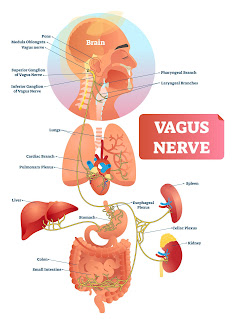
As bad as the pain can be from a punch to the liver though, it is not even the worst part. The next thing to happen is that your body totally shuts down. This is because the liver gets compressed when a strike connects, which causes it to expand on the other side. This expansion presses the liver into the vagus nerve, going all the way to brain and being responsible for many of our motor functions. Once this gets triggered, you will likely lose control of your body, particularly your legs. It's like they suddenly don't work or can't hold you up and thus, you will involuntarily drop to the ground.

This doesn't always happen from ALL liver shots but the strike doesn't have to necessarily be hard to produce this effect. A well-place punch of even medium power to an exposed part of the liver will drop anybody. Doesn't matter how tough they are, how strong they are, they are going down. And even if the punch isn't perfect, it will still be painful, it will still sap your energy, and it will still linger throughout the fight, physically and psychologically.

Presumably, striking any internal organ might produce the same effect but the liver is unique in that it is less protected and more vulnerable than the others, for the reasons mentioned previously.

So why not just throw liver shots all the time? I would recommend to many fighters that they do bring this punch into their arsenal. But like with any great reward, there are certainly risks, and like many fight finishing strikes, the liver shot must be set up. It's hard to just walk up to someone in the ring and lead with the liver shot (though it can be done with great speed and footwork - see Ryan Garcia vs. Luke Campbell - https://www.youtube.com/watch?v=NN0o1MK05mE). For one, depending on the physique of your opponent, it is likely that their basic boxing guard will keep the liver somewhat protected by their own right elbow. The other problem is their right hand. The liver shot is a circular punch so you throw it and your opponent throws a straight right hand at the same time, the straight right hand will get there first as the closest distance between 2 points is a straight line.

Thus, the key to landing a liver shot is do something that occupies your opponent's right hand in some way. Could be they are catching/blocking your previous punch or expecting a punch coming somewhere else. Simply throwing jab-crosses will give you some information. How are they defending it? Are they catching your cross with their right hand? Or bringing their hands up at all to block? If so, throw a jab-cross-liver shot and really try to get that liver shot in quickly, without telegraphing it. If they parry your jab with their right hand, you could simply fake the jab, slip outside and throw the liver. These are simple examples and there are plenty more but hopefully give you a sense of how the chess game works in boxing.

What if your opponent does throw that right hand at your head though? Even better! Well, even better provided you dodge said punch by slipping or rolling. Then that liver shot is right there, so long as you are close enough. Anything thrown at your head level means their hand is away from their body and at least temporarily, their ribs are totally exposed. 

Another defensive thing to note here is that you don't only have to fear your opponent's right hand when throwing a liver shot. Their left can be a problem too and this is why I recommend covering the right side of your head completely when you're starting to throw your punch. You may not even see that hook coming at all so be ready and expect contact!

Whether you are throwing that liver shot as a counter punch or setting it up, it can be a devastating attack that changes a fight completely in an instant. And even if your opponent blocks it over and over, keep going back there (and find new ways to go back there). You can also use that as a set up too, for the left hook to the head. Once your opponent is comfortable blocking your liver shot, fake it and go to the head. Then when they start rolling your hook, bring that left uppercut into the mix. Then...it just goes on and on. Like I said earlier, it's a chess game. And a sweet science!

Friday, March 11, 2022

What About Speed Bags?

A guy once called up my club, asking about our boxing classes. He had never done it before but was a fan of the sport and really wanted to learn. The conversation, paraphrased, went kind of like this:

Him: Do you guys have a speed bag?

Me: No, we use 100-pound heavy bags in our classes. Mitts and pads sometimes. And we do have a double-end bag, which I like a lot better than speed bags.

Him: Well I want to go to a real place.

Me: What do you mean, "a real place?"

Him: You know, some place that has a speed bag.

Me: Hmm. What makes you think a place needs a speed bag to be real?

Him: Because that's how I see boxers training. They're always using speed bags.

Me: You ever see them actually throw punches in the ring? Do they box like they are hitting a speed bag?

Now of course I was being snarky here, which I probably shouldn't have been on the phone to somebody, but his reasoning just kind of caught me off-guard. The more I thought about it though, the more I understood where he was coming from. Just about every movie about boxing will show the boxer using a speed bag. It looks cool in those montages and for the purpose of movies, it is relatively easy to teach someone, an actor, how to do it without looking like they have imperfect technique (as opposed to the heavy bag, where their flaws will really stand out). Plus it makes a cool sound and you can very easily show someone hitting one, failing at it, and then suddenly perfecting it over time to suggest progress in your training. But you'll see great boxers doing it too. Pretty much all of them use it in their training. So should you?

As is the case with any type of training, boxing or otherwise, you must understand the goal. What are you using this tool for and how is going to help you achieve or better achieve that goal? And if you only have a limited amount of time for training (or even if you don't), are there other tools that are more effective in this regard?

If you are not aware, the speed bag is a small, very light, teardrop-shaped ball which are hung from some kind of backstop that it can deflect off of quickly when struck. The striking is done differently. Instead of the punching with the knuckle, the boxer hits the bag with the bottom side of their hand, the meaty part in between the pinky and wrist. This is not a strike done in boxing, in fact it would be illegal to do so and at least on that level, the use of a speed bag does not directly mimic anything you would do while boxing.

But that doesn't mean that it won't help you with your boxing, as will other non-boxing activities like skipping rope, core exercises, medicine ball work, jogging/sprinting, bodyweight, etc. There are certainly pros to using a speed bag, mainly that it helps train rhythm and timing, something which is key. There are other benefits too, like building shoulder and arm endurance as well as coordination (though it is often noted that it builds hand-eye coordination specifically, I do not actually agree with that at all - your eyes aren't doing anything).

So, the speed bag does train some skills that will help you with boxing. Does that mean you should use one if you want to get better at boxing? Not necessarily. Because there are other ways to train these things as well as improve your basic boxing skills. Going back to what I said earlier, you have to decide what the best tool is for you and your goals.

To better find the answer, let me just ask you one important question first: How much time do you have for exercise/boxing? If you box professionally and it is your main job, I am hoping you have about 6 hours, 5-6 days a week for physical training. Otherwise, most of us generally carve out about an hour per day - or every other day - for our workouts.

Let's say you fall into the latter category. My next question is, how do you want to spend that hour? Whether you are training boxing or just about anything else, I am guessing that you want to maximize the time spent. Get as much bang for your buck as you can, right? If you're training in boxing, that means you want to spend the hour getting as good at boxing as possible and part of that also includes getting in the best shape as possible.

Generally, with respect to training tools, is the speed bag the best, most efficient, most effective way to improve your boxing in a short period of time? My answer is no. Doesn't meant the speed bag is useless- not at all! If you have several hours a day, every day, to train, it is a great way to work on your skills and take a break from boxing. But if you only have an hour, this will not give you as much bang for your buck. You're going to get that from actually boxing: throwing jabs, crosses, hooks, etc., head movement, defense, footwork, counter-attacks, feints - all the things you would do in a fight. Whether you are hitting a heavy bag, mitts, or sparring (provided you truly know how to box and have no bad habits), these things will benefit your boxing skills more than anything else. You will learn rhythm and timing and improve things like shoulder endurance and coordination more than you would on a speed bag. There are supplemental exercises you can do as well, and the speed bag could certainly be one of them (in addition to core work, jumping rope, bodyweight exercises and more) but if you're time is limited and you want to maximize your boxing training AND your fitness, boxing is the best way to go. What if you did 45 minutes on a heavy bag and say, 10 minutes on a speed bag? I would honestly still say you are going to get more from that 10 minutes of boxing on the heavy bag than you would a speed bag, provided you properly directed by a good coach live and in person. Both in terms of fitness and skill.

In that phone conversation I had, I mentioned we use a double-end bag. Those, or even one of those reflex bags, are also a lot better than a speed bag, in my opinion. They require more timing than a heavy bag, as well as more precision. Plus they help you with defense and not overcommitting on punches, as they come right back at you AND you are still boxing, throwing regular strikes.

I know some old timers will still swear by the speed bag but like everything else, the answer depends very much on context. About you personally - your goals, your time, your interests - but not what you see on the movies and TV. 

Friday, March 4, 2022

4 Boxers To Learn From (+ 4 NOT to learn from)

I love it when someone brand new to boxing asks me what fighters they should watch/check out for form. It means that person is interested and engaged. Love it! I also love studying boxers myself and even like to visualize that I am them during heavy bag rounds. Not just imagining fighting another person but imagining that, for a split second, I am Mike Tyson throwing that body shot-uppercut combo. Helps me throw it with more power and explosiveness. And this is something I recommend other people doing too, as well as checking out different fighters to emulate. But you have to be a little careful. Watching as much boxing/kickboxing/mma as your heart desires is certainly a good thing but if you're looking for specific people to emulate, some are much better examples than others. I wrote a blog post about whether some fighters have bad form and will give 4 boxers I think you should study and 4 you shouldn't. Who and why? Read on!

4 Boxers To Watch & Emulate


1.) Mike Tyson (in the 80s)

So bite someone's ear off then? No, I wouldn't recommend ear biting, face tattoos or trying to learning much from the 90s era for Mike Tyson. Even in the mid-to-late 80s, when Mike Tyson was the baddest man on the planet, lighting everybody up, he was a little misunderstood. It was just so easy to get caught up in his spectacular, highlight-reel knockouts and think of him as just a brawler, all about power and ferocity with none of the true sweet science. This wasn't the case however. It was Tyson's perfect, beautiful technique that gave him such awesome power. It was his brilliant footwork, head movement and coaching that put him in position to deliver such overwhelming blows. His ability to hit angles and use every muscle in his body, stretching and snapping like a whip to maximize the force behind his punches, was a thing of beauty and all about the science.  He had a unique, "peek-a-boo" style that was certainly not for everyone but focusing on all of his dynamic strikes and body mechanics is a great inspiration for anyone learning to box. There are plenty of other heavyweights with great technique but Mike's is flawless. Also lost in the brawler stereotype, what set Tyson apart in his prime was actually his DEFENSE. He still had plenty of power in the 90s but what kept him from achieving his full potential (besides prison), was that he started to lose his defensive skills, once he stopped training with Kevin Rooney. But going back to the 80s with Rooney as well as Cus D'amato, I could watch those fights all day (and I often do). For me, it's like listening to a good song over and over.


2) Canelo Alvarez

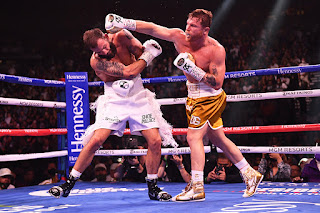
Besides being a likable, exciting, talented fighter who seems like a great guy, Canelo is an excellent example to learn from because he is pretty much good at everything. Speed, power, defense, pressure, head & body shots, conditioning, ring IQ, everything. All of his technique is solid and efficient. He protects himself well, even when going for the kill. Copy Canelo and you will end up a well-rounded, disciplined boxer.


3.) Naoya Inoue

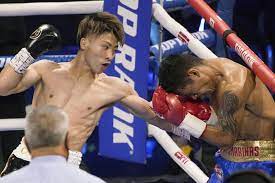
Another modern fighter who isn't as well-known as Canelo but probably as talented. He stands 5'5 and has fought at weights as low as 108 pounds and yet he is an ideal person to study for power punching, especially if you're smaller in stature. Inoue is lightning-fast, for sure, but the reason his nickname is "The Monster" is because he is incredibly aggressive and knocks people out, particularly with his ferocious body shots. Everybody that steps in the ring with him knows what he wants to do and yet still cannot stop it. And just like Tyson, his power comes from science. Mass times acceleration, delivered from perfect body mechanics.


4. ) Vasiliy Lomachenko

I've often said in person and in this blog that footwork is the most important thing in boxing. More important than even punching. And Willie Pepp not withstanding, I think it is reasonable to say that Vasiliy Lomachenko may have the best footwork in boxing EVER. The famous story is that when Loma was a kid, his dad took him out of boxing and made him train in dancing only for 4 years, before coming back to the ring. This makes sense when you watch Vasiliy move. His feet are incredibly quick, precise and efficient, getting him into a position where he can hit his opponent yet that opponent can't hit him. That is Sweet Science 101 right there. And as I allude to on almost a daily basis, even if you're not training to hit an opponent, that kind of footwork and movement is going to improve your workout on multiple levels.


4 Boxers NOT to Learn From

IMPORTANT NOTE: I am not at all suggesting you shouldn't watch these guys. In fact, I think you should check them out too. But their boxing styles are not something I recommend emulating at all, unless you have trained for a long time and it just so happens, your personal style is complimentary. That being said, I am also not suggesting that you can learn nothing from these great fighters either.


1.)  Muhammad Ali

But isn't he The Greatest? Many would say that he is - with Sugar Ray Robinson and Joe Louis being notable exceptions - and he certainly is the most iconic, important boxer of all time. A larger-than-life personality who defined boxing from the 1960s on. He was a unicorn though. Only one of his kind. As such, he did things in the ring that no boxer should do nor would any coach tell you to do it. Ali often had his hands down, crossed his feet, and even threw punches with his hands down and his feet crossed. There is no way that should work in fight but he was magic and could pull it off. To solidify his legend, Ali once employed the "rope-a-dope" strategy where he shelled up and took punches for rounds in an attempt to tire his opponent out. This is never a good plan to count on and even for Muhammad Ali, this may not have worked had the circumstances not been absolutely perfect (loose ropes, fight taking place in Zaire, fight postponed due to an injury, etc.).


2.) Floyd Mayweather Jr.

If Muhammad Ali was The Greatest, Floyd Mayweather Jr is TBE - The Best Ever. Floyd was able to amass a perfect boxing record, rarely sustaining any significant damage and rarely losing rounds. His reign lasted for many years before retirement and just like Ali, he singlehandedly changed the game of boxing. So why not try join Team Money? I shot an older video talking specifically about his style and why it's not the best way to learn boxing, except in special circumstances, but if you don't feel like watching it right now, let me just say that Floyd's style is very specific and while Tyson had a specific style too, it was something very fundamental that kept him protected whereas Floyd's Philly Shell requires high-level reflexes and a deeper understanding of boxing than most people have, at least in the earlier stages. Another thing about Mayweather is that he doesn't throw combinations, per se. He'll throw jabs to bait opponents to try and hit him, he'll throw crosses for that purpose sometimes too but mostly he will use his cross as a pull counter and occasionally, you will see that #3 lead hook. He'll mix it up a little on the inside but the vast majority of what he throws are just single punches. As stated earlier, he certainly makes it work and has been beyond successful with it but when learning boxing, I think it is critical to learn combination punching. Watching Floyd train on the mitts and the heavy bag is problematic too but I will get to that in a bit.


3.) Showboaters like Emanuel Augustus and Prince Naseem Hamed

First off, both of these guys are awesome to watch. You should definitely check out their highlights. Emanuel Augustus was known for his "Drunken Master" style. He would wobble back and forth, dance and throw punches way off rhythm, off-balance sometimes too and even though his record wasn't super great, you were never bored watching him.

Prince Naseem Hamed had lightning-fast feet and head movement and thus, was able to dance and showboat in the ring and not really pay the price for his antics. One of the most exciting fighters ever and also fun to imitate but not necessarily good to imitate while training and especially not in the ring!

The issue with fighters who showboat is pretty obvious, I am sure. You have to master the basic skills before you can even think about deviating and you then you have to have truly special ability to pull off any kind of showboating. The only thing I would say in defense is that whether you're just hitting a heavy bag or boxing in the ring, it is very easy to get tense, get tight. Could be nerves or just naturally straining to throw punches and move around. Almost everybody could be more relaxed. It's important to check in with yourself routinely and try to loosen up. Not necessarily by dancing around or putting your hands behind your back or anything silly but if that truly helps and you can get away with it, so be it.


4.) Most People Hitting Mitts on Instagram

I know I sound like one of those old, bitter cranks, and I once again wrote a whole blog post about this, but following boxing training hashtags and/or boxers, you are going to see a lot of what I consider terrible mittwork. Terrible in the sense that it doesn't necessarily demonstrate the right way to box or how you should be training. Doesn't mean it has no value at all. Plenty of good fighters do this, even fighters with good technique inside the ring like Ryan Garcia, and there are some legitimate reasons to do it other than being flashy and just showing off. But this is not necessarily boxing. It is something else. The reader's digest version of my old post is that the people hitting the mitts are not throwing complete punches as the mitt holder is meeting them halfway (sometimes more), the punches are just tap-tap-taps, the lower body is barely moving for punches and just general footwork, the combinations are just long patterns, not necessarily anything you would throw in a fight and even the defense is somewhat non-realistic. I do of course want to say that this is not ALL mittwork you see on Instagram (or anywhere). Some of it shows off great boxing mechanics. But the vast majority of what I have seen does not and if you are looking at it for technical cues, I would suggest going elsewhere. Like the Top 4 fighters I mentioned above!


How to Remember Combos - Part II

  A few years ago, I wrote a blog post about how to remember combinations- particularly in our club's boxing classes. Things move prett...