Thursday, December 30, 2021

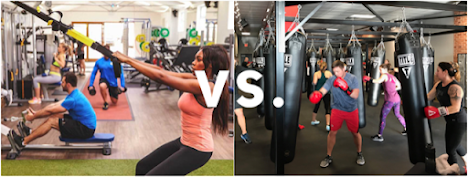
8 Reasons Group Fitness Classes are for YOU!


I used to be someone who did not like the idea of working out with a group. I was more of a loner type and did not want anyone looking at me - judging me - while I did something that was physically challenging. When I got into martial arts, I was kind of forced into a group atmosphere and while it was uncomfortable at first, I soon discovered that the pros drastically outweighed my reasons for hesitancy.


As I have said many times before: the best workout is the one you enjoy yet still challenges you. Even without a lot of fitness knowledge going in, a cursory search online can lead you to some physically-challenging workout routines. But will you be able to push yourself to rise to those challenges that should consistently escalate? And even if you can, will it be fun and exciting for you?
This is where the magic of group exercise classes come in. You have an opportunity to try something new, often with no commitment, that can change your life forever in multiple ways. Here are 8 great reasons why that is true:
1. You Need Some Instruction
This is a big one. You can read up on everything online now but when it comes to something physically challenging, skill-based or not, you are going to need some personal instruction on how to do it. Going on your own can result in injury, not learning the proper way to do the thing you're studying or at best, not being able to get much better after your first month or so.
So from there you've got 2 options: you can hire someone to teach you privately or a group fitness/small group training type of session. Private training will generally average anywhere from $40-$100/hour whereas group classes cost only a fraction, yet still give you access to the high level instruction of a trainer without the barrier to entry. (Note: Sometimes a friend or family member will have some experience or expertise here and will train you for free. Provided they know what they are doing, that could be great! But especially as it relates to boxing, I have seen some people who had trained with a friend that really shouldn't be training someone else. I've seen some good examples here too, but mostly bad.)
Any decent fitness studio will have coaches who know form, cues, and mechanics, as well as how to deliver that information in a room full of people, correcting improper form and giving you feedback. If you try out a group class where the coach does not do this, then you are probably in the wrong place!

2. Unless You Are One of the Remarkable 1%, Someone Else HAS to Push You

Very few of us can consistently push ourselves outside of that comfort zone during a workout. And the ones that can would probably still work that tiniest bit harder if someone else is telling them what to do. I have seen it time and time again on both ends. No matter how I try, now matter how determined and diligent I am, I will never work as hard alone as I would with even someone else in the room, let alone an actual trainer.

And even if that other person pushes you just the tiniest bit harder - like you skip that microsecond of rest you would take on your own - that tiny bit can make a HUGE difference. It's those microseconds we spend out of our comfort zone that lead to results. Plus, it's easy to get distracted on your own. I generally start thinking of other things, which can be great for activity like jogging, but having someone else driving me will keep me focused on what I am doing.


3. Planning Workouts 

One area where I believe less thinking is better is when it comes to planning workouts. Let an expert take care of this for you, designing the next 45 or so minutes of your life so all you have to do is show up and work.
Besides saving time and energy, this is better for your body. Unless you are fitness professional yourself, odds are that you don't have the prerequisite skills needed to create a workout program that is truly effective as possible, working everything in the way you want to. Again, there are plenty of workouts you can find online but also again, it may be harder than you think to tell the good from the bad. And none of it is personalized for you in any way.

4. Getting Bored
On a similar note, group fitness programs are a great option if you get bored easily working out on your own at the gym or following videos from home. A good instructor will mix things up, keeping it fresh, and focusing on creating a fun, enjoyable experience as well. Despite all I have said about challenging yourself and pushing yourself, my first goal when creating a class or individual program is to make it fun. It could be the most challenging workout in the world but if it's not fun, most people won't want to come back. Or in my case, it could also be the most perfectly instructional boxing lesson ever but if it's just cold, clinical and no fun, the average person isn't going to want to keep doing it. The "fun" part should relate to everything too - the workout itself, the instructor's personality, music, everything.

5. A Little bit of Competition May Be A Good Thing!
While I wouldn't necessarily think about being competitive at first - and it was part of the reason I was initially resistant to group fitness classes - a little bit of competition once you can get used to the workout may help you take that next step. It doesn't even have to be direct. If I am in a class and see someone else working hard, I will be motivated to try and match or exceed their intensity levels.
Then if you are more of a competitive type, even better! Many group fitness classes have some sort of technology that tracks elements of their workout. At my boxing club, we have sensors on the all the heavy bags, which detect how many punches someone throws, as well as the force delivered on each punch so we have some members who like push each other to score more points or at the very least, compete with themselves yesterday.

6. It's Good To Be Around Other People Too!
Once again, this as not necessarily my jam originally. It's not that I didn't like people, I just wasn't exactly a social butterfly. But even if I wasn't looking for buddies, it was still good/healthy for me to be around others and I think that is true for most of us. No person is an island. And while it might be a little out of your comfort zone, it is a great way to ease into being more socially comfortable. You don’t have to interact and if you do, there are time constraints (like class about to start)  that make the interaction less of a commitment. I found that particularly helpful and eventually realized that I wasn't a social butterfly but a social caterpillar, who eventually emerged from his chrysalis!
No matter what stage you might be in, meeting people can be especially difficult these days but as part of a class, you can really get to know other members over time as well as the coaching staff. Going through a challenging workout together can even be bonding.
And of course, even if you don't meet friends at your class, you can still workout with your friends. Sign up for a new class together. With family members too. Workouts are a fun, healthy way to connect with your favorite people.

7. There is a Support System in Place
Along those lines, having external motivation to stick to your routine is extremely helpful and a group setting can provide just the encouragement you need. There is some accountability that doesn't exist when you exercise on your own. I have seen this work successfully time and time again and even seen members reach out to others who have gone MIA.

8. Keeps You On Track To Meet The Minimum Fitness Recommendations
It might sound obvious, but group fitness classes are a great way for people to inch closer to the recommended minimum movement requirements set forth by the Center for Disease Control and Prevention. They recommend that adults participate in a minimum of 150 minutes of moderate-intensity aerobic physical activity and two or more resistance training sessions each week. Going to programmed, group exercise classes will check those boxes for you. Exercise functions like medicine and helps lower your risk of all-cause mortality and cardiovascular disease. 
There are certainly additional health benefits in going beyond the recommended amounts and that is where your specific goals come into play. Whatever group exercise option you pick, it should align with those goals. As much as I love boxing and think everybody should do it, if someone walked in and said their goal was to bulk up and build 40 pounds of muscle mass, I would say that boxing is not necessarily the right training for that goal. Whereas if someone came in and said they wanted to lose 40 pounds of fat while building some tone, lean muscle, then boxing is the best way to do that!
So if you've never done group exercise classes before, try one right now! Or if you have done them in the past but didn't have the best experience, then try a different kind of class. I can almost guarantee you won't regret it, whether it is something you choose to do long-term of not. You likely have nothing to lose and probably the most valuable thing to gain - your own health and fitness!


Thursday, December 23, 2021

Do New Year's Resolutions Actually Work?

When was the last time you made a New Year's Resolution? How did it go? Did you stick to it? Does anyone stick to them?

There are plenty of statistics out there and none of them are particularly encouraging. Very people who make New Year's Resolutions feel any kind of success by the end of the year. Many go into it feeling confident and maybe even by the end of January they still feel on track but as the months go on, everything falls by the wayside.

Sounds pretty hopeless BUT you CAN be one of the success stories. I can almost guarantee it. It will require some work on your part though, and it all comes down to the planning and tracking stages.

 
S.M.A.R.T. GOALS
 
If you want to actually follow through with your resolutions, New Year's or otherwise, you have to be smart about your goals. Both in terms of considering them thoughtfully and the acronym – SMART, which stands for Specific Measurable Attainable Realistic and Time-Bound.
 
It really is important that you hit on each of those letters.

I could say that I want to be fit and healthy, which I do, but that is way to vague. I could say that I want to be the fittest and healthiest I've ever been, which is also true, but that is also vague, not particularly measurable and probably not that realistic as I get older.

How about this then: I want to lose 10 pounds by my next birthday on April 16th. It's very specific, easily measurable, definitely attainable and by making it time-bound, I have set the expectation and can start formulating a plan for success. Of course your goals may be more detailed than this but for the sake of brevity in my explanation, I will keep it simple and assure you that this system can work for anything.

I cannot stress enough how important SMART Goals are. It is not just one of those catchy acronyms. Most people fail because they don't understand this part. Common resolutions like, "Lose weight" or "Eat better" or "Get to bed earlier" are not an actionable goals. Certainly all good things but without those specific, SMART details, they are pretty much just wishes, not goals.


YOU NEED A PLAN!

So the next step is to figure out that plan for success. How am I going to accomplish this SMART goal and lose 10 pounds by April? Well, according to the calendar, there are 106 days between January 1st and my birthday. That's about 15 weeks, let's say. So I just need to lose a pound a week. What's that, you say? That my goal was for 10 pounds and if I lose pound a week for 15 weeks, that would be 15 pounds. True, but I believe in giving myself some slack. A week is a pretty short interval of time and the pounds may not come off in lockstep like that. I may lose 2 in one week, then not lose any for 2 weeks. I want to give myself a little more aggressive of a mini-goal to stay on track for the macro-goal and this is a pretty good cushion. Plus, that way, I don't freak out if I don't lose a pound in a week and feel like I am never going to hit my goal. This is another big reason people don't make it. There plan quickly seems unattainable and they give up. By allowing myself some extra slack, I can better stay composed throughout the process.

The harder part comes next. How am I going to lose a pound a week? Then very general rule-of-thumb is that 3500 calories equals a  pound so using that, I need to create a 500-calorie deficit per day.

So how can I create such a deficit? Diet and exercise! But again, that is too vague. I need to figure out how many calories I am taking in a day, on a regular day, and how many I generally burn through exercise. The exercise part is harder to track accurately but there are plenty of ways to get a decent approximation. Once I have the baseline figured out, I can start to think of ways of cutting down calories in and increasing calories out to hit that 500 number per day. I could go on and on about the different ways to do this - how much should come from eating and how much should come from exercise - but I will save that for another time. For now I will just say that whatever way I pick, it just needs to be sustainable and the one thing I would NOT recommend doing is cutting out breakfast. A lot of people do this but there are many statistics out there to show that skipping breakfast and weight loss do not work as well together as they might seem.

 
ACCOUNTABILITY AND SUPPORT
 
Okay! So I have my SMART Goal, I have a reasonable plan to achieve said goal so now I just need a way to track it, to stay accountable, and to get the support I need to help ensure success.

Tracking my particular goal of losing 10 pounds by my next birthday isn't too tough. I can use an app like MyFitnessPal to track all the meals I eat as well as exercise sessions I am doing to see if I'm hitting that 500/day mark. I can also use a scale to see that those calories are turning into pounds. The only tricky part with scales in particular is that weight is not necessarily lost in consistent chunks and the number can be very determined by when I weight myself. In this case, I will just plan to do it every Monday, first thing in the morning. But again, when it comes to weight loss, it is important that I don't get too bogged down by the numbers I am seeing on the scale. The weight may not come off at all for a few weeks but as long as I'm sticking to my calorie plan, I should be good.

Oftentimes though, it really pays to be accountable to not just yourself. I should tell other people about my goal. Why? Because that makes the whole thing more real. Now I feel a little bit of pressure, good pressure, to really stay on task. I don't want to ever have to tell them that I completely failed! Plus, by telling a spouse or roommate, they may not bring as many snacks into the house or maybe be encouraged to try and get healthier too.

Because there is also the good kind of support and accountability. You want your friends, family, co-workers etc. to encourage you. It really can help. Maybe they'll have some good advice for you too. Teamwork indeed does make the dream work.


ANTICIPATE ROAD BLOCKS AND CELEBRATE SUCCESS

If things like weather and illness and just general lifetime events will prevent you from sticking to your plan, make alternate plans for situations that you cannot avoid. Like if I know I have a wedding to go to in March and plan to eat and drink a lot, I should build this excess into my plan and tweak the days around it to compensate. Most importantly, do not let a missed day or two throw you completely off target. Once again, this is what happens to so many people, New Year's Resolutions or not. They get off to a good start, feel good, feel committed and the instant life gets in the way and messes with their schedule/plan, they can't recover. Instead, do your best to get back on track as quickly as possible, which should not be extremely difficult if you have set appropriate goals.

It is easier to stick to your plan when you feel good and successful. Try to find a new way to reward yourself when you meet your smaller goals. Maybe each month I stay on track, I give myself a little gift/reward of some kind. If the goal is fitness-related, get yourself a new clothing item or piece of equipment (like boxing gloves). Something that makes exercise feel better, more appealing. Even just feeling like you look better when you exercise will help. It makes the whole thing feel more serious, more committed.

Then finally, the only way your goals/resolutions are going to become reality is if you believe in them and most of all, believe in yourself. You can do this! Maybe you haven't had success in the past but you can always take control and turn it around. If you aren't sure how to do it, seek out professional help. The internet can be a great resource (like right now as you read this!) but every body really is different and you may need some more personal attention. As I've said many times before, you are worth it!!

Thursday, December 16, 2021

Best Gift to Give the People You Love the Most?

I am an only child raised by a single mother who worked full-time and went to school for much of my childhood. This was in Los Angeles so when you factor in travel distance and traffic, I didn't see my mom a whole lot. Still though, that was better than my dad. He lived out of state, traveled a lot, was generally disinterested in me. Even with Christmas and Summer breaks, I could count the number of times I visited him on both hands. He and my mother split when I was 3 and 44 years later, I still barely know the guy.

That's the end of my sob story but I promise I am not telling you any of this to feel sorry for me. There is another point I am getting to here. I grew up fine, followed my passion for work, got married and when we had our first child, a boy, I decided I was going to do the opposite of what my parents did. I was going to be there for my son in all the ways my dad wasn't for me. And this is not unique. To some degree, the way we raise our kids is a referendum on our childhood. It is evolution at work! 

As I have mentioned in previous autobiographical posts, I was always an active person but it became more and more difficult to "find" the time to exercise and just generally, take care of myself as a parent now. Especially as my son got a little older, I couldn't reconcile taking an hour to go work out or spending every precious minute with him. I didn't want to be anything like my own dad. And there was nothing more important to me than him. So how could I possibly take inessential time for myself instead of my son?

My regular routine then became not-so-regular. And of course my health started to decline. I was overweight, out of shape, but there was a mental aspect there as well, even more significant than the physical. You hear people say this all the time, most of us nod our heads in agreement, but it really is true - your physical and mental health are very much intertwined. I was not happy being out of shape, I didn't feel good, and this adversely affected my ability to be the father I wanted to be. Plus I started to think about the future. Suddenly, having a child with plans for more meant that my long-term health more and more important. I was already going to be an older dad and wanted to live long enough to see my kids grow up, hopefully have kids of their own, and me being still spry enough to play with those potential grandkids.

Plus, regardless of physical health, I (and I think just about all of us) needed some Me Time. As many sacrifices we make, and should make, for our children, it cannot and should not be ALL about them. Just as we need a work-life balance, we need an us-family balance too. Not just for us but for them too. Taking care of yourself will help you better take care of others.

Again, this was stuff I had heard before, thought about before, but it was only now that I fully realized how true it was. The best gift we can give to the ones we love the most is our own health, mental and physical. So we can be there for them in the long-term and even the short-term. Taking an hour or however long a day for yourself to truly invest in yourself helps everyone who depends on you. YOUR health and wellness is a gift to THEM. You don't have a be a current parent either. Your own parents, family and friends all care about your health and wellness too!

It's one thing to know this and even believe it wholeheartedly but it is another thing to actually do it. I want you to ask yourself a question right this very second: What are you doing for own mental and physical health right now? For real? Every single one of us should ask ourselves this question frequently. And if we don't have a good answer or think we should have a better answer, now is the perfect time to start working towards one. No matter where you are on your holiday shopping right now, I can tell you that this is the best gift you are going to be able to give anyone who really cares about you.

Friday, December 10, 2021

Who Is the Greatest Boxing Coach of All Time?

Most people have, at some point in their lives, heard about the greatest boxers of all-time. Even someone who's never seen a fight before can generally recognize names like Muhammad Ali, Floyd Mayweather Jr., Sugar Ray Leonard, and Mike Tyson. But unless you really study the sport, it's unlikely you'll be familiar with great coaches and trainers. They are not nearly as high-profile as their fighters, most certainly, and also get much less exposure than just about anyone who coaches a team sport. This does not mean, however, that coaching and training boxers is less significant than the role that say, a football coach.

Boxing competitively is a whole different emotional journey than any other non-combat sport. Oftentimes fighters put their complete and total trust in their coach. They had better, as they are also putting their lives on the line every time they step into that ring. As such, trainers have the opportunity to truly mold their fighters. Whether they become pros or not, the coach is a teacher, mentor, a sometimes father figure, and really guides the fighter along as their skills and boxing brains develop.

Here are those who are generally recognized to be the greatest boxing trainers of all time, by most accounts (including mine). Right now, the list is pretty old-school but modern trainers like Eddy Reynoso and SugarHill Steward may eventually earn their places in history as well.

Cus D'amato
Eddie Futch
Angelo Dundee
Freddie Roach
Ray Arcel
Lou Duva
Emanuel Steward
Teddy Atlas
Roger Mayweather

Interesting thing is that with exception of Roger Mayweather, none of these men competed at a high level, some with little ring experience at all. This is generally true in ALL sports. Take a look at any one - football, soccer, MMA, tennis, bocce ball, etc. - and check out who the experts consider the greatest coaches to be. Almost none were superstars in their own right. There is a reason for this. Being a great coach is an entirely different skill-set than being a great fighter or player. Sometimes these skills can even be somewhat contradictory. Many great athletes are born with natural physical ability that not everybody else has. Some things just come easier to them than others. This can make communication, motivation, instruction and sometimes even relatability tough when they coach others who are not as talented. I have known boxers who literally can't even describe how to throw an uppercut. Not that they describe poor technique, I mean can't really explain it all. They can certainly throw and show a good punch but the breakdown is less apparent to them as they have pretty much always been able to do it well.

Anyway, back to the original topic, who of these legendary trainers really THE best? For me, it's Cus D'amato but I am very biased. Not only did he train Mike Tyson (my favorite fighter) but also created a whole new style of boxing that Iron Mike was the perfect vehicle for. Together, they made the sport must-see TV for people like myself and after Cus passed away and Tyson later fired his protege, Kevin Rooney, Mike's skill-set declined significantly and he was never the same, mentally or physically. That famous loss to Buster Douglas would not have happened had he continued to work with Rooney and Tyson's full potential was never potentially realized. That is how important a trainer can be. A truly great basketball or football player can be great regardless of who coaches them. In boxing, I think this is far less common. The right trainer can make the difference between champion and also-ran.

As far as the opinion of those not as biased as I am, I think most would tell you that Angelo Dundee belongs at the top of the greatest trainer list, since he worked with both Muhammad Ali and Sugar Ray Leonard. Although it is Eddie Futch who has probably trained more great boxers than anyone else, including 4 of the 5 men to beat Ali. Plus, one of his disciples was Freddie Roach, who is himself also considered by many to be the greatest trainer of all time.. Then of course there are countless fighters trained by all of these men who never became famous but whose lives were positively impacted by the time spent together.

Besides being a great teacher, communicator, motivator and brilliant boxing mind, a big thing that any great coach in any sport on any level needs is to care. To care about those who they coach (as well as the sport itself). Not just in their success but in their development as athletes and people. This care will flow into everything else they teach and do. Doesn't have to be all warm and fuzzy either. I was fortunate enough to work with a great coach for several years who wasn't particularly nice at all. But he definitely cared about me getting better and his tactical mindset was something I really admired and wanted to emulate as best I could. He also inspired me to want to teach this as well, which why I am sitting here writing this in the first place!

Friday, December 3, 2021

How Can You Stay Fit Around the Holidays?


Can anyone actually do this? For some, it would officially qualify as a Christmas Miracle. How does one handle the challenges of being confronted by tons of delicious food, parties, travel, relatives and just generally crazy schedules?

Oftentimes, it simply leads to complete resignation, which causes people to give up all regular routines, self-discipline and otherwise manageable self-restraint related to health and fitness. I’ve certainly been there!

If this sounds familiar to you too, your first step is to change your mindset. Practicing sound nutrition, health and fitness habits is vital to life-long wellness. Healthy eating, effective physical activity and regular rest are practices that should become part of who you are and essential to your daily life, just like brushing your teeth or taking a shower. This shift in mindset sets the stage for greater self-empowerment and self-confidence, as well as a transition of control from external to internal.

The key is to recognize that you have the power to transform your life by applying key foundational behavioral principles. When you do that, you won’t get bogged down with seemingly endless challenging choices in every situation.

Here are a few tips to help avoid being derailed during the holidays:

Eating:

Anyone can tell you to eat healthy foods and instead of cookies, just eat celery. Those people are certainly correct but they are also jerks. Who is going to eat celery instead of a cookie? So what can you do? Well, for one, drink lots of water. Besides hydration just being key to survival, it might help you feel a little bit fuller, especially during a party where snacks are plentiful and if you happen to be drinking other things at one of these parties, it helps balance you out. For every alcoholic beverage, make sure you follow it with one full glass of water.

When it comes to food, definitely try to have fewer snacks and sweet treats in the house over the holidays, as you probably run into plenty of this stuff at parties and under the tree at Christmas. Or if you do have them, try to make a healthier alternative easier to grab (ie put a bag of almonds in front of the cookies). And hey, if you can resist some of the temptation and eat that celery, by all means, do it! And I will tip my cap to you.

Exercise:

Understand that your schedule may be thrown off and you may not be able to stay in your normal routine but you can maximize the opportunities that you do have for exercise. Try doing 2 boxing classes in a row! Or more!! You might think you can’t do it, you’re tired after 1 class, but I would bet you some Christmas Celery that you absolutely can do it and will feel very proud of yourself afterwards. Or push yourself a little harder in a class. For our club, try to get a higher Impact Wrap Score, really speed up during a burnout, do planks on your toes instead of your knees, keep your hands up during class, try to cut down on rests, do the active rest exercises, ANYTHING!

Also, something positive is better than nothing. Get away from an all-or-nothing mindset. If you don’t have time for a full workout, do 10 minutes of exercise and you’ll reap some positive benefits. Get down and do 5 push-ups at some point during your day. You can come late to a class here, leave early, or even stop in when a class isn’t going on to get some workout in if schedule really doesn’t allow.

Sleep:

The most underrated component of fitness. Getting regular, consistent sleep is essential to your physical and mental health. But just like everything else, this becomes harder to maintain when our schedules get thrown off by the holidays. At least though, it is a little easier to be stay disciplined with than eating. And you’ve just got to be disciplined! Get 7+ hours of sleep every night. Or at least go to bed at a time where that could actually happen. Be consistent about this bedtime. This isn’t just to keep you from feeling crabby in the morning. A better sleep will actually help you with weight loss, muscle gain, stamina, energy, you name it!

Friday, November 26, 2021

Workouts vs. Boxing

Even if you train in boxing only for fitness, there are still some key differences between boxing and other workouts or fitness routines. While some of it may sound obvious, I can tell you that many people who don't box consistently are not aware of these things, especially those really into fitness and exercise regularly. Some tend to see boxing as just another type of workout when really, there is much more to it!

1) Boxing is a skill-based workout - You could say that all workouts require some level of skill and you would be technically correct but there is an infinite gap between them and boxing in this regard. Boxing is a sport, even when training alone, and the big differences between a sport and physical activity is that sports are constantly reactive and changing whereas physical activities are not. The skills required to play the sport are also constantly changing, constantly evolving, so you can get better and better at it. Sure, you can get better at jogging or lifting or HIIT or other workouts, skill-wise, but it never really changes much after that initial learning phase. Boxing continues to challenge your skills no matter how good you get. And no one is ever good enough at boxing! No fighter just stops throwing jabs one day because they've pretty much mastered it. You can ALWAYS get better at everything, no matter how good you are. 

This - and everything else you will read below - is why consistent training in boxing is so important. It is not just another workout you can mix in once in a while. I mean, it certainly could be, but you will not see the same critical benefits if your training is sporadic. You will get a sweat on, burn calories, build muscle, etc, etc. but you won't challenge those things to a whole new level without skill development.

2) Boxing trains other skills too - Beyond the specific skill of boxing, there are other base skills that boxing continues to train - coordination, balance, agility, reaction time and quickness. You might get one or two of those in a workout but you aren't going to get them all, which is another general difference between exercise and sport. And while training these things may not sound as compelling as losing weight or toning up (something boxing is also ideal for), these skills will help you with everything you do as part of your daily life activities. Plus, these are all things that if you don't use, you lose. They tend to peak while we're kids (playing all the time), then slowly decline through adulthood and this can start to become a problem as we advance into our older years, especially when it comes to balance.

3) The better you get at boxing, the more physically challenging the workout is - This is something that not only makes boxing different than other forms of exercise, it makes it different than some other sports as well. As your skills improve, you are able to recruit more muscles to do work, move more explosively, react without having to stop and think, and incorporate more elements (footwork, head movement, feints, etc) into your workout. Oftentimes you will see professional boxers get tired in the ring and start to slow down in the later rounds. Then their technique starts to suffer too. Why is that? It's because proper technique and skill requires extra energy. The vice versa of this is true too. To get the best workout, your technique and skill must improve.

4) Learning the skill portion can oftentimes be a valuable distraction - If I did, let's say, burpees for a few minutes straight, I would definitely see fitness benefits but I would not look forward to it and the whole time while doing those burpees, I would think about how I can't wait to be done! This will always have some effect, however slight, on performance. Whereas if you are thinking about a particular boxing combination or drill, thinking about your technique, visualizing your opponent, and being compelled to act suddenly at unexpected times, changing rhythms/speeds/movements, you may work harder because your mind is distracted by this stuff that you don't even realize how hard the rest of your body is working. This has been true for me and most everyone I talk to about it. Many, including myself again, also find this learning component interesting and have a stronger desire to do it than just an exercise that they know is good for them, though not particularly interesting.

#5) Boxing works every muscle, cardio and strength - There are some other forms of non-sport exercise which do this too but most are more isolated - different lifts for different muscle groups, different activities specifically for cardio, etc. - but boxing, when done properly, hits it all at once. Now the first time someone ever puts on a pair of gloves and hits the bag, they are very likely not going to hit every muscle. It's most natural to just swing our arms when we throw punches than use the whole body to throw them like a boxer (just look at most streetfights). But this is where #3 comes in. As you learn how to do these things properly, you unlock new muscle groups, not only training them but changing the whole dynamic of the workout.

#6) Boxing creates functional strength - I used to be (and still sometimes am) a strength trainer and when I asked many of my male clients what their fitness goals were, I often heard that they wanted to be strong/get stronger. Certainly a good goal and my follow up question was always a "Why". "Why do you want to get stronger? What do you want to do with all of that extra strength we are going to build?" This was a tougher question to answer. I think oftentimes it was to look stronger and have bigger muscles. Also a perfectly fine goal but there is a big distinction between building muscle and having functional strength. Weightlifting can provide the muscle part, for sure, so long as it its done properly but it doesn't inherently give someone functional strength, which is strength you would use to perform the activities of daily life. Anything from carrying groceries to playing a sport. This is less about having larger muscles (although they can help, at times) but having a better balance of strength in more areas, particularly the core, as well as coordination between these areas. Doing something like a bench press will work your chest and arms but you are lifting a perfectly balanced load on one plane of motion, in one motion, with the rest of your body perfectly balanced as well. Life is a series of unbalanced loads at unexpected times, requiring quick reactions, recruitment of support muscles and other neural processing. This is exactly what boxing is! And not only will boxing help you become functionally stronger, this kind of strength will help prevent injuries too. In daily life and even in cross-training.


Please note that this is not me trying to say that boxing is better than all other workouts. For me, it truly is but as I have mentioned in this blog several times, everybody is different. We all need to find the thing that inspires us to stay active and challenge ourselves, if we want to pursue fitness and just general wellness. What I do want to say, objectively, is that boxing is different than all other workouts. Just like our bodies, all workouts are different from each other too but boxing training is on another level, having more in common with playing a sport. And while there are many benefits to that, as I have hopefully explained here, it also means that consistency is more important to developing the skills which will allow you to take your fitness to that new level.


Wednesday, November 17, 2021

What Kind of Boxer Are You? Take the Quiz!

You may know that in boxing, there are distinctly different styles. Every boxer is unique but most break down into a few simple categories - The Outboxer, the Slugger (Brawler), The Pressure Fighter (Swarmer) and the Boxer Puncher. 

Some people add in other sub-categories (counter-puncher, peek-a-boo, etc.)  but those are the main ones. The best style is the one that works best for you!

Try this simple quiz to figure out what that is!!

#1: I am...

  • A) Taller than average
  • B) About average height
  • C) A little shorter than average

#2: My favorite punch to throw is...
  • A) The cross
  • B) A hook
  • C) I just like throwing punches in bunches!

#3: If I could make one part of my boxing game better, it would be...
  • A) Footwork and head movement
  • B) Power
  • C) Speed + Endurance

#4)  Which of these other forms of physical activity would I enjoy the most?
  • A) Dance
  • B) Lift weights
  • C) Run

#5) My favorite movie character is...

  • A) Bruce Lee
  • B) Rocky Balboa
  • C) Wolverine

#6) When Alex says, "The jab is the most important punch in boxing", I think...
  • A) Darn right, gotta get my jab better and better!
  • B) Maybe so but I would much rather throw power punches!
  • C) True, because I use it to set everything else up

#7) When throwing combos in class, I usually prefer the ones that are...
  • A) Medium length, maybe with some footwork
  • B) Short and sweet!
  • C) I actually like the longer ones!

#8) The picture I most identify with is...

  • A) 


  • B) 


  • C)


#9) When it comes to taking risks, I am...
  • A) Generally pretty risk averse
  • B) Depends, but either way it'll all work out in the end
  • C) Gotta take risks if I want to succeed!


#10) If I ever got into a fight, I would probably...
  • A) See what my opponent does first, then react
  • B) Bring it on! They don't want any of this!!!
  • C) Run right through them, overwhelm with punches


RESULTS:


Mostly A's - Out-Boxer

The Out-Boxer likes to keep a distance between their opponents and use long, straight punches to keep them at bay. When opponents try to get inside, out-boxers are skilled at moving their feet and counter-punching. Power or even speed (certain types of speed) is not the main focus here. It's more about finesse, picking their opponents apart before the finish. Great Out-Boxers include Muhammad Ali, Tyson Fury, Sugar Ray Leonard, and Floyd Mayweather, Jr.


Mostly B's - Slugger (Brawler)

Sluggers are all about power. They throw less punches, are generally slower, but all they need is one! Thus, Sluggers have a shot to win any fight, no matter how out-classed (this is the famous, "puncher's chance" axiom) and are also a threat to win even when hopelessly behind on points. Great Sluggers include George Foreman, Sonny Liston, Deontay Wilder and Julian Jackson. Most don't consider Mike Tyson a Slugger - as he had other dominating skills similar with different styles (he was just that good!) - but he certainly was known for that fight-ending one-punch power that all Sluggers are.


Mostly C's - Pressure Fighter

The opposite of an Out-Boxer, the Pressure Fighter (also known as Swarmers, In-Boxers) wants to get in close and crowd their opponents before overwhelming them with a flurry of punches. Some are very powerful as well but speed and relentlessness are a must. Since keeping constant pressure on the opponent is key, stamina is another quality a good pressure fighter must have. They will have to eat some punches and be a little bit fearless to get inside, knowing that their tenacity will carry the day. Great Pressure Fighters include Julio Cesar Chavez, Roberto Duran, Micky Ward, and Hector Camacho in his earlier days.


General Mix of A, B, & C - Boxer-Puncher

Boxer-Punchers possess many qualities of the other styles, though not quite as dominant in one department. They have plenty of power, hand speed, counter-punching ability and sometimes mobility. All this versatility is useful but it also means they may need to adapt to their opponent's style to get the advantage - out-boxing Sluggers or overpowering an Out-Boxer. Great Boxer-Punchers include Sugar Ray Robinson, Joe Louis, Tommie Hearns, Lennox Lewis.


Uhh, I Don't Know - A Charlotte

Traditional, honest, bright, and polite. Charlotte is always smiling, always optimistic, and always loyal to her friends. She sees the best in people and doesn't ever give up on life. Plus she seems to get shocked EVERY time Samantha says something racy, even after knowing her for many years.

Thursday, November 11, 2021

Why You Need an In-Person, Coach to Learn Boxing & Kickboxing

With gyms being shut down all over the country during the initial COVID outbreak, many of us were left to our own devices for working out. If you were able to continue somewhat of a routine exercise program of any kind, congratulations! It's not easy and many weren't able to do it. Now more than ever, there are plenty of options for working out at home on your own (or with a "virtual trainer). There are, and will continue to be, boxing and kickboxing versions of this too. Some even come with a heavy bag and others can be done without any equipment.

I am happy to see more people getting into boxing on some level, I truly am. Best exercise you can do, in my humble opinion, and something we all can (and should) be doing. But I can tell you from enough experience with others who have tried to learn boxing at home with these programs (or just on their own) that this does not work for our particular sport/exercise routine. Not only can you not learn the proper technique, but even worse, you can even develop bad habits that become more and more challenging to fix if you ever want to improve.

With all due respect to the physical challenge and health benefits of something like cycling, running on a treadmill, HIIT or other forms of exercise, these are things that may be hard to get really proficient at but still easy to do on a base level. Most of us can pedal a bike. Can we pedal as fast or for as long as someone who trains in this arena? Probably not but we can perform the movement necessary to develop those abilities. Boxing is different. It is not just movement or even a series of movements. It is a sport and a science and an art and very technically focused in a way that traditional exercise is not. Someone on a video screen can tell you how to throw a lead hook, demonstrate themselves from multiple angles, go slow and fast, and do everything to most perfectly explain every aspect of the punch so that you can try to emulate this yourself but there is one thing missing. And it's the most important thing of all -  feedback!!!

This is where some form of in-person learning is required. A trainer needs to show you, then have you do it, then cue technique, then have you do it, then cue some more, than iterate and iterate and iterate until you get it down but even then, there is ALWAYS stuff to learn. No one is perfect at boxing nor even perfect at any aspect of boxing. You just get better and better. Every time I think I've got it all, I suddenly realize that there is so much more. And that is a wonderful thing! Not only from a skill development standpoint but also from a physical exercise standpoint. Enhancing those skills enhances the workout. I promise you that I am not just saying that because I am a boxing coach and want everybody to be better boxers. I have seen many new members train at our club, having never boxed before, and after about a month, ask me why they are finding themselves more tired afterwards. Why the workout got more challenging. My answer is almost always the same: because you are doing things more properly. Recruiting more muscles, moving more, using different energy systems, etc. It's not just about pushing yourself to throw more punches, it's understanding how to throw those punches in a way that pushes you even further.

Conversely, if you don't learn the proper technique at first and build habits, they get harder to fix. And the more time you spend reinforcing them and committing them to muscle memory, the harder that fixing gets! I have seen this a fair amount recently from home boxers. If you want to learn boxing and continue to get better - as well as increase the value of your workouts - it is so much better (and easier) to build good habits early, while you are still in that beginning stage.

But also remember, feedback doesn't just mean critique. You need positive feedback too! It's helpful on many levels to know when you are doing something right/well. Not only to reinforce the proper form but also just to make you feel good! Which matters a lot!

Another factor that needs to be considered is that every person really is unique. This is something I have seen time and time again. Everyone moves in different ways, thinks about things differently, has a different athletic background, has natural tendencies, etc. Another very fun thing about my job. Just like with boxing itself, every time I think I've seen it all, I realize that it's just the tip of the iceberg. There is always stuff to learn when it comes to coaching, and not just in terms of instruction but reacting to the many different types of students too.

With that said, there are some things we all have in common and I can tell you that one of them is that we don't always perceive ourselves accurately. What we think we're doing may not be what we are actually doing. There was a certain point in my training where I would have bet a million dollars that I NEVER dropped by cross hand before I threw the punch. Never. Not even one millimeter. And then one day I recorded myself. I was shocked to see that not only did I do it but that I did it consistently. Because I had done it for so long too, it was harder to fix than had I never developed the habit in the first place. Probably still happens from time to time, too.

Then finally, another important aspect of getting actual coaching feedback on what you specially are doing is that it will keep the workout itself more interesting and compelling because you are actually getting better, opening up whole new levels of nuances. Whereas if you do the at-home workouts, you can certainly improve your skills from repetitions and trainer cues, you will almost definitely plateau pretty quickly without the personalization that allows for that next step. When people tend to plateau from any workout is when they also tend to stop doing the workout as consistently. Then less. Then they eventually stop entirely and the big, expensive piece of equipment joins the fitness graveyard many of us have in our basements.

While feedback is certainly the most important component here, there are other big reasons why you can't learn boxing at home vs in person. Here is a quick run-through:

1.) Equipment - To get the best workout for both strength and cardio, a hanging heavy bag is significantly better than a freestanding bag offered by most of the at home boxing programs. Then the heavier the bag, the better. You can certainly buy a heavy bag with a bag stand but it will move around when you hit it and these things usually break after a few months of heavy use.  There are the freestanding bags as well but if you've ever used one, you know they are soft and have no weight to them in the bag so the workout is not nearly as intense as a hanging, actually heavy bag. Plus, those break too. And move around (even if you put concrete in the base). A big rig with a large heavy bag will make a HUGE difference. I have purchased (and broken) every type of home bag and can tell you from a workout, as well as consistent training perspective, you need something commercial strength. Even if you're not a heavy hitter.

2.) Energy Level - There is no doubt that people work harder in groups than they do alone. Besides a trainer pushing and motivating, the energy of a group working out is contagious. While our club was shut down during the COVID mandate, I would do my own class plans with the music up and try to push myself as hard as possible as if I were in a regular class. It didn't even compare. I couldn't push myself like I do in a group environment. 

3.) Distractions - While we're all hopefully comfortable in our homes, they are full of distractions and a place we have set aside for relaxation and maximum comfort. These are great things for a home but not necessarily for a workout. You need to be distraction-free, focused entirely on the task of learning this challenging skill and with the mindset of concentration and hard work that is difficult to get at home.

4) Time - So much of the allure with at-home workouts of any kind is the notion that you can exercise any time you want. Sounds great! Makes it easy to find time when you don't have to adhere to a particular schedule. Except it actually doesn't for the vast majority of us. I have worked with literally thousands of people, talked to them about their exercise habits, and seen firsthand what has been successful for them and what hasn't. I can tell you most who are successful don't find time to work out, they make the time to work out. No matter how much you love your exercise program, it really is work (if you're doing it right) and we're not always super motivated to do work of any kind. Whether people are training at home or at the gym, I would always recommend setting a hard, relatively immovable time for themselves for their exercise program. I also believe that keeping it consistent (ie 5:30pm Monday-Wednesday-Friday) will help stay on track but some people can still make it work with a changing schedule.

5.) Freestyling - While there are options for video-directed, at-home boxing workouts where a virtual trainer gives you specific combinations and exercises to do, there are also plenty of people who pick up a heavy bag and just kind of freestyle punch it on their own. You will also see this at plenty of boxing gyms as well. It is my strong opinion that this is not a way to learn boxing nor get a real significant workout. You need a plan. What to do and when to do it, with timing parameters. So once again, at a gym OR at home, have a pre-designed structure to your workout. Don't just freestyle!


Friday, November 5, 2021

4 Reasons While Body Shots Are The Best + 4 Ways to Mitigate the Risk


When most people think about punches in boxing - or just punching someone in general -  they imagine them punching to the head. And the majority of punches in most modern boxing matches go to the head too. But often the best and most effective punches are to the body. "Body" generally meaning anything but the head but there are certainly spots more effective than others.

Here are 4 reasons why body punches are the best:

1.) Easier punches to land/hard punches to dodge - The head is a small target and any decent boxer has learned how to move their head, making it harder still, especially in the beginning of a fight, whereas the body is the opposite story. It's a larger target that is harder to move significantly. When fighters get into trouble, their natural instinct often is to duck and get lower. This is why you never want to forget about throwing those body shots. They can land whether your opponent ducks down or not. They may also get blocked but damage is still done.

2.) They are more effective than you might think - Most people new to boxing are often very surprised to learn that there are body shot knockouts. Plenty of them. One would naturally assume that being punched anywhere is going to hurt but unless it's happened to you personally, it's hard to know just how debilitating a body shot can be. There are spots, like the liver, spleen and floating rib area, that can end a fight immediately. Doesn't matter what kind of six-pack you have or if you drop bowling balls onto your belly with no pain, if that punch sneaks under the rib to the liver area, you are going down. Your legs simply stop working and you crumple to the ground in extreme pain.

3.) Hard to recover from - If you take a hard body shot but not one that stops the fight, you will still be feeling it for the entirety of the fight. It may make breathing hard/painful, which is obviously a big problem. Conversely, you may see boxers take a hard shot to the head, act wobbly and stumble around for a while, yet come back in the later rounds strong. Of course the long term damage that can come from taking these head shots is far greater than body shots, in terms of the length of a fight, body shots are much harder to recover from than head shots.

4.) Opens up the head - So if you take that hard body shot or multiple body shots and they hurt and they're hard to recover from, you are not going to want to take more. You're going to guard that lower body carefully. When that happens and even just when you are thinking about having to defend/deal with those body shots, what opens up? The head! Not only do your hands come down but that head isn't quite as mobile as it used to be when the fight started. But a smart opponent still knows to go back to the body, even after the head has opened up a little.


So these are all great reasons to throw body shots but of course with every great reward, there is often a risk and body shots in particular can be riskier punches to throw. Why? Because you also open up your own head by throwing a punch low (at least when it is a hook, uppercut or hybrid). You can try to get lower when you throwing one of these body shot but at some point, this will prove impractical.

Here are 4 much better ways to mitigate the risk of throwing body shots:

1) Speed - A well-thrown body shot will often happen so fast, the person being hit has no idea it's even coming. A classic example is Micky Ward vs. Alfonso Sanchez. The faster you are, the more likely you will land it and the less time your opponent has to catch you.

2.) Moving off line - Especially when throwing that lead hand to the body, the key is to take your head off line before you throw it so as to avoid your opponent's rear hand (provided you are in closed stances). The shortest distance between two points is a straight line so always remember that a cross will beat your hook with all things being equal. So making sure that your head is not in that straight line can put the odds back in your favor.

3.) Distraction - Just like most power punches in boxing, you will likely need to set up your body shots. Best way to do that is to put something in their face as a distraction. A quick flurry of straight punches or uppercuts can cause your opponent to bring their hands up in defense even though none of the punches may be intended to do damage. They are just there to blind your opponent so that the body shot opens up for you.

4.) Bringing hands back, rolling out, immediate defense - With any punch in boxing, it is critical for most that you bring your hands back to defend your head as fast - or faster - than you threw the punch out there. With body shots, this is even more important as your head is more open and it may take a split second longer to get your hand back. So you have to be very diligent. Have to really focus on keeping that non-punching hand up as well. Then finally, as another general rule of boxing, if you're not throwing a punch, either your head is moving, your feet are moving, or both. Once again, with body shots this becomes even more important. Once you throw that punch, be prepared to roll out. dip down, or do something because there's a pretty good chance your opponent will throw a punch to your own head soon thereafter!


Thursday, October 28, 2021

What is the Difference Between Boxing and Kickboxing?

Maybe a strange question but something I get asked often. And it's not necessarily a simple answer such as, "kickboxing is boxing but you also throw kicks." There is definitely more to it than that. There are also some myths related to boxing vs. kickboxing that I will cover here as well. Read on!

First of all, boxing refers to a combat sport governed by specific rules. While there are variants to the structure of a particular boxing match, the general rules themselves are pretty much the same. All striking is done with fists. Striking with anything other than a fist - like a kick, knee, elbow, headbutt, etc, - would be illegal.

Kickboxing is a little bit more of an amorphous term. It can refer to multiple disciplines and styles. But one thing that remains pretty constant is that you are indeed throwing kicks as well as punches. What kind of kicks depends a little on the style you train. In the last 10-20 years, I would say that Muay Thai has been the prevailing influence in most kickboxing classes out there. Along those lines, kickboxing will also include strikes with elbows and knees as well as involve certain movement, like spinning, that would never happen in boxing (not always because is is illegal, it would just be impractical).

But there is more to it than that. Boxing generally more nuanced than kickboxing with the big example being head movement for defense. It is the only fighting system I know of where head movement is utilized like this. You can do these things in kickboxing as well but it doesn't always make as much sense. For instance, you can certainly roll underneath a punch in kickboxing but you run the risk of getting knee'd in the face ducking down like that. You could slip a straight punch but if a round kick immediately follows, you will run right into that kick and it won't feel good. Thus, defense in kickboxing is likely going to involve blocking and checking vs. head movement and footwork in boxing.

So if kickboxing involves a wider variety of strikes than boxing, does this mean it is more difficult to learn than boxing? Not necessarily. I would say that at first, it is a lot of extra terminology to take in and that is why I don't recommend people start off with a kickboxing class at our club. There is also more to manage in terms of spacing from the heavy bag but as far as truly learning the skill, I don't believe that kickboxing is more challenging.

What about from a workout perspective? This is where certain myths kick in (pun intended!):

MYTH 1 - You Get A Better Workout From Kickboxing

I have watched hundreds and hundreds of people in boxing and kickboxing classes and can tell you that beyond a shadow of a doubt, around 99% of them will get a better workout from boxing vs. kickboxing. Only exception being those who are very high-level kickboxers already. Otherwise, most people move faster, produce a lot more volume, sweat more, burn more calories and build more muscle from boxing. Why? Because that 99% of the people I've seen will go faster and work harder in a boxing class. Kicks slow things down considerably in a number of ways. It generally takes twice as long to throw a kick than a punch, plus there is extra time transitioning to other strikes in a combination as well. Power output (for punches and kicks) is not the same unless again, someone is in that less-than-one-percentile category of being a very advanced kickboxer with a high level of coordination.


MYTH 2 - Kickboxing Works Your Legs While Boxing Is Just Upper Body

This is a big one: since boxing only allows a person to strike with their hands whereas kickboxing allows striking with the hands and legs, it make sense that kickboxing is more of a lower body workout, right? Wrong! Well, for the most part. Because whenever you kick or knee something, that means you are standing on one leg for a duration of time and thus, your calves may get a better/different workout but otherwise, boxing is as much about the lower body as it is the upper body. I'm gonna say it again because if you haven't done a lot of boxing before, you may not realize it at all: Boxing is a full-body workout, using your legs (and your core) as much as the upper body. Granted, this is one of the harder things for people to learn but it is the essence of boxing. Every punch starts from below the belt meaning that the first thing you do, the first muscle you move, when you decide to throw that punch is going to come from the hips and legs before working its way into the fists. Boxing allows for more aggressive footwork as well and pushing off the ground in your fighting stance is going to strengthen your legs more than throwing a kick, in most situations.


MYTH 3 - Boxing Is Mostly For Men While Kickboxing Is More Female-Oriented

This perception is the reality for many people I've spoken to. Because of things like Tai Bo and Cardio Kick classes being offered at big box gyms, it does seem like many people from the outside perceive boxing as more of a male sport with kickboxing being more female-oriented. I myself don't see it that way at all but understand that the viewpoint exists. Then there's the old stereotype of a boxing gym being like in the movies - white walls, spit buckets, a bunch of rough-looking people training on their own. Of course that is not what a boxing gym has to be at all and I have certainly seen hundreds of women (and men) at our club really take to boxing. Some may never have thought they would but getting the opportunity in a very non-intimidating environment was all it took. Both boxing and kickboxing are for everybody, they truly are. All ages, fitness levels, body types, etc. It is a beautiful thing.

And kickboxing itself is a beautiful thing too! I hope I am not coming off as disparaging here. I enjoy teaching both kickboxing and boxing, I enjoy doing them both myself, and I recommend both to everyone. I will say again that almost every single one of you will get more from a workout perspective from boxing but you will certainly work hard kickboxing as well plus the personal enjoyment factor must not be discounted. Plenty of people love kicking and thus, should kick away! And if you haven't tried it, try it!


Thursday, October 7, 2021

I Can't Do THAT!

As I have said time and time again, I am lucky enough to have the opportunity to teach an extremely wide range of people how to box. Kids as young as 5, adults as young as 81. People who have fought in the ring before, done EVERY other sport or workout in the world, and people who never played any sport whatsoever and did everything in their power to avoid gym class. I love this! It is wonderful to watch all different people from all walks of life develop these skills, as well as just improved physical abilities.

The tough part can be convincing people that they can do challenging things. That they are stronger than they think. Some people tell me that they can't hit that hard, move that fast, get something complicated like footwork down, that certain combinations are just too long. Then there are many, many others who maybe don't say this out loud but certain think it (I can read minds, btw.) 

While not boxing specific, let’s take the push-up as an example here. Some folks may not have the physical strength to perform a standard push-up. Or can’t do it on their toes. YET. That is the key word- "yet". They may not be able to physically do these things today but what about tomorrow? Or the next day? Or they try a little harder tomorrow and the next day and for several days after that but still, no go? Does this mean that this someone simply cannot do a push-up? If that is the belief they have or the conclusion they come to than yes, they may be correct. 

But I know we get stronger with each one we try. I know there are techniques that can help us get there faster, I know there are other health-related changes that can get us there.. Barring any major physical disability, most of us absolutely can do a push-up. Maybe not today, maybe not tomorrow but some day. That is how training works. And WILL work for you. But you have to believe it. Don’t let the mind hold your body back from achieving something amazing. Instead, turn your own brain into a training tool. A coach. A weapon that can give you the advantage over any challenge.

On the flip side, this does not mean you can go back in time and beat Muhammed Ali in his prime. But if you train hard, as if you really believe nothing will hold you back, I 100% guarantee you that you will be physically stronger, mentally tougher, and with better skills than you ever thought possible when you originally told yourself that you couldn’t do it. That it was too hard.

I’ll go one step further here. We are often encouraged as people to try our best. And rightly so. Putting in a sub-par effort for something that matters to you doesn’t make a lot of sense. But as non-babyYoda once said, "Do, or do not. There is no try". So do your best, don’t try your best.

It’s more than that though. Is your best really ‘your best’? That can be hard to answer. And certainly no one can answer it for you. When it comes to fitness, especially boxing, the hope is that your best is always better than it was yesterday. I hear more and more often are people resigning themselves to the sentiment that life is hard and they are just doing their best to hang in there. They're not wrong but I'm not sure that this approach will help them always do their best. By even telling yourself that life is tough (again, not wrong), it's taking the focus away from you. YOU are tough. You are strong. You can't control what life throws at you but are strong enough to take it on. You CAN do it! And if you're somehow not able to, just remember that you are only not able to do it yet.


Saturday, September 18, 2021

What is the Most Dangerous Punch in Boxing? (Hint: It's not a trick question)


When thinking about the most dangerous punch in boxing (or any combat sport), the key is to separate the criteria which could make a punch/strike dangerous. Is it the punch that someone throws the hardest? Is it the punch that someone throws the fastest? Or can land the most? Or the one that targets the most vulnerable spot? 

It could be any one of those things or a blend of them all. And then you might have to factor in who you are fighting. But I believe it can all be summed up by saying that the most dangerous punch is boxing is the one you don't see coming. This is consistent with the majority of knockouts we see as well as just common sense. If we know a punch is coming, we can avoid it, block it or at the very least, brace for impact, which even by itself makes a HUGE difference. If you have no idea it is coming and are not prepared in any way, you are toast.

But that is kind a crap answer. Not because it's not true - it is almost undeniably so - but if I read the headline, I wouldn't want to hear something like, "it's the one you don't see coming" so I want to give you something a little more specific. What is the specific punch that you are least likely to see coming?

I truly believe it is the #3 lead hook to the jaw, more often than not. Particularly with 2 fighters of the same handedness (righty vs. righty, southpaw vs southpaw) but it can often still be true with open stances as well. Once again, this is consistent with knockouts we see in the ring but also some degree of common sense. Here are several reasons why that killer lead hook can be a total shock to the system:

1.) Most punches from that side are jabs - Most punches in a fight are usually jabs, period. While not the most dangerous punches in boxing, jabs are certainly the most important. They set everything up, they buy you time, they buy you position, they draw your opponent out, and more. So if your opponent used to responding to jabs from that lead side, this may provide the split-second you need to surprise them with a hook. Whether they parry, catch, or slip the jab, this provides opening for your hooks to land cleanly

2.) Lead hooks can come from outside of peripheral vision - Along those lines, when you are looking at an opponent straight on, the lead hook can often come in from an angle outside of your peripheral vision, especially if your hands are up high and slightly blocking your view, which certainly can happen. Plus, the closer you are to your opponent, the more outside this punch is and thus, gets harder to spot.

3.) Opponents are more focused on your power hand - Along THOSE lines, depending somewhat on your style, your opponents are likely going to be paying strict attention to your other hand, as that is the power side that they really don't want to get hit from. Doesn't mean they will ignore your lead hand but if they are expecting power to come from the rear, you might be able to catch them sleeping on that front hook.

4.) Opponent commits their rear hand - This is the big one that I see often in fights. Someone throws the rear hand, like a cross, uppercut or overhand and that means that hand is no longer protecting their face. It also means that their eyes are likely focused on target of their fist. So the entire side of their face is open and their eyes are temporarily distracted. Add on potentially being slightly off balance if the punch misses and the opportunity for a brutal lead hook couldn't get much more golden.

This has all been in reference to a hook at the head of our opponent but the same is mostly true for a hook to the body is well, although those can be easier to spot. Very effective weapons and something you can throw with just about as much power and explosiveness as you can throw with your dominant hand. Just takes a lot of practice as lead hooks are almost always awkward at first. But more on that later! For now, I would love to hear any questions, comments, or better yet, alternative suggestions!!

Thursday, September 9, 2021

Protecting Yourself Against COVID (and Other Threats)

Whether you or someone you love has contracted the virus or not, COVID has affected all our lives considerably, and there will continue to be discussions and discoveries over what health precautions should be taken. I am not here to debate any of these current topics, nor is this meant to be political in any way, but I did want make a quick point about something I am NOT hearing discussed very much at all, which is our general health and wellness.

No matter how you feel about vaccines or public safety measures, I believe it is universally agreed upon that the healthier you are as a person, the less chance you have of suffering more significantly from COVID, most other viruses, diseases and/or serious medical issues.

As a gym owner, I am speaking to some degree in my own self-interest here but the only reason I am in this business is to help others become healthier. A healthy lifestyle is more than just exercise too. That's just one piece of a whole puzzle that includes diet, sleep, self-care, hydration, habits and both mental and spiritual well-being. When people speak about public safety, none of these things should be overlooked or discounted.

Now of course this does not mean that eating a perfectly nutritious diet, not smoking, not drinking and exercising 5+ days a week and generally being outside of the high-risk group means you won't get COVID or any illness. Of course not! As one of our members put it recently, COVID does not discriminate. But if we're looking at who tends to suffer the most from this virus and just about any other health threat out there, it is generally the higher risk groups, which includes obesity and other co-morbidities.

I strongly believe we should be encouraging everyone to take better care of themselves. It's not JUST about ONE thing. Once again, these are only parts of a larger puzzle. Some pieces are bigger than others, sure, but all deserve focus, all deserve attention. So many of us wait for health problems to surface before we feel compelled to make changes. It's the default approach but it's now more dangerous than ever. Don't wait! Get out in front of it and take control. Take steps to improve your physical and mental health. Because nothing is more important than that, right? 

What Are The Boxing Weight Classes & What Do They Mean?

Even if you are not a boxing fan at all, you probably know that there are weight classes in the sport. Professional fights take place betwee...